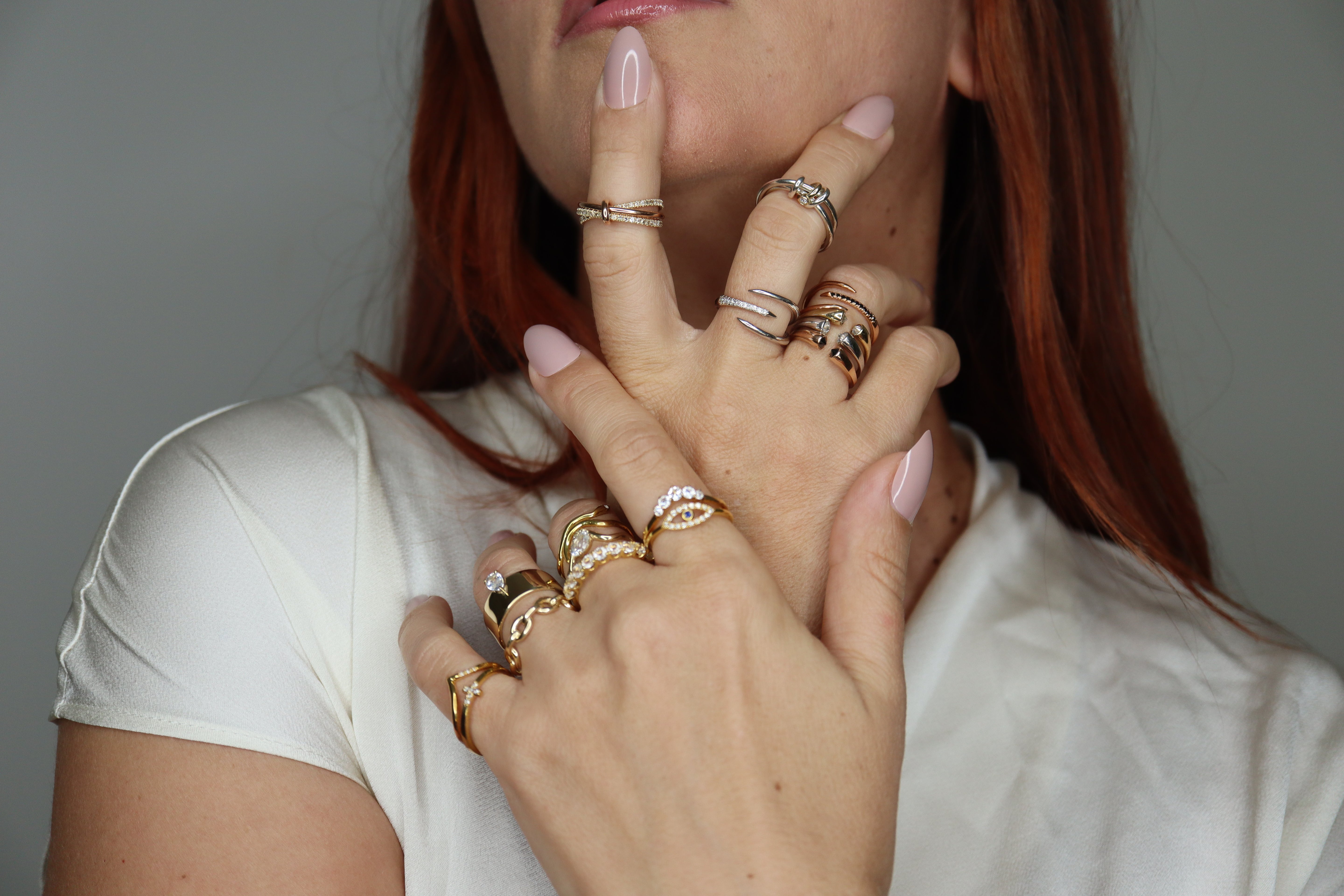




Is 14K Gold Jewelry a Good Investment? Intrinsic Value, Cost-Per-Wear, and Heirloom Worth
Is 14K Gold Jewelry a Good Investment?
Solid 14k gold jewelry is a good investment in the sense that the material retains intrinsic value indefinitely - every ring contains a calculable amount of pure gold worth its current market price - but it is best understood as a personal item with lasting material and emotional worth rather than a financial instrument. When you buy a solid 14k gold ring, you are acquiring an object made from a precious metal that has held value across every civilization, every economic cycle, and every century of recorded human history. Gold does not depreciate to zero. It does not become obsolete. It does not stop being gold. Whether the ring sits on your finger for the next forty years or gets passed to your daughter, the material retains intrinsic worth that no fashion trend or economic downturn can erase.
That does not mean jewelry is a financial instrument. It is not a stock, a bond, or a savings account. But understanding the investment dimension of solid gold jewelry helps frame the purchase correctly - not as an expense that disappears, but as an acquisition of something with lasting material and emotional value.
How Much Pure Gold Is in a 14K Gold Ring?
Every solid 14k gold ring contains a quantifiable amount of pure gold. The 14k designation means the alloy is 58.3% pure gold by weight, with the remaining 41.7% consisting of strengthening metals like copper, silver, and zinc that make the gold durable enough for daily wear.
The pure gold content of your ring has a calculable market value based on the current gold spot price. If gold trades at $2,000 per troy ounce and your ring weighs 8 grams, the pure gold content is approximately 4.66 grams (58.3% of 8g), which has a melt value of roughly $300. This is the floor value of your ring - the minimum it would be worth if you melted it down and sold the raw gold. The actual value of the finished ring is significantly higher because of the craftsmanship, design, and gemstones involved.
This floor value is something that plated, filled, and vermeil jewelry simply does not have. A gold-plated ring contains micrograms of gold, not grams. Its melt value is effectively zero. When the plating wears through, the object has no material worth at all. Read the material comparison guide for the full breakdown of what each gold type actually contains.
How Has the Price of Gold Changed Over Time?
Gold's value is not static. Over the past fifty years, the price of gold has risen substantially, from approximately $35 per ounce in the early 1970s to over $2,000 per ounce in recent years. This trajectory has not been a straight line. Gold prices fluctuate with economic conditions, currency markets, and geopolitical events. There have been periods of decline, sideways movement, and rapid spikes.
But the long-term direction has been consistently upward. A solid gold ring purchased twenty years ago contains the same amount of gold it did then, but the market value of that gold has increased significantly. The ring you buy today may follow a similar trajectory over the next twenty years. This is not a guarantee, and jewelry should not be purchased as a speculative investment. But it is a meaningful distinction from consumer goods that depreciate to zero the moment you buy them.
Compare this to any other category of personal accessory. A designer handbag loses value the moment it leaves the store unless it becomes a collector's item. Fashion jewelry becomes worthless within months as plating wears and trends shift. Electronics become obsolete in two to five years. Solid gold jewelry is one of the very few personal items where the raw material holds, and historically increases in, value over time.
Why Is a Handcrafted Ring Worth More Than Its Gold Content?
The melt value of the gold is only the foundation. The finished ring's value includes the design, the craftsmanship, and the labor that transformed raw gold into a wearable piece of art. This craftsmanship premium is what separates a mass-produced ring stamped out by a machine from a handcrafted piece built by a skilled jeweler in a Los Angeles atelier.
For Antoanetta's kinetic rings specifically, the craftsmanship value is substantial. Each articulated link is individually cast, fitted, and assembled by hand. The tolerances that allow smooth movement without pinching or wobbling require precision that automated production cannot achieve. The hours of skilled labor embedded in a kinetic ring with seven moving links far exceed those in a simple stamped band. Read the handmade vs. mass-produced guide for a detailed look at what craftsmanship means in practice.
This craftsmanship value does not appear on a melt value calculation, but it is real and recognized by anyone who understands jewelry. A well-made ring from a known designer or atelier carries a value that transcends its metal content, particularly as the piece ages and the atelier's reputation grows.
What Makes Solid Gold Jewelry an Heirloom?
The most significant "return" on a fine jewelry investment is rarely financial. It is emotional. The ring you wear every day becomes part of your identity. It carries the memory of the moment you chose it, the milestone it marked, or the simple decision to invest in yourself. Over decades, it accumulates meaning that no financial calculation can capture.
And unlike virtually every other personal possession, a solid gold ring can be passed down. Your grandmother's solid gold ring is still wearable, still beautiful, and still valuable today. Your grandmother's gold-plated bracelet is in a landfill. The heirloom guide explores what makes a piece worthy of being passed to the next generation.
Heirloom value is not abstract. It is the practical reality that a solid 14k gold ring purchased today will still exist, still function, and still hold value in fifty years. The gold will not degrade. The craftsmanship will endure. And the story attached to the piece - who bought it, why, and what it meant - grows richer with every year and every hand it passes through.
How Does Cost-Per-Wear Compare Between Solid Gold and Plated Jewelry?
The upfront price of a solid gold ring can feel significant compared to a plated alternative. But the cost comparison changes completely when you factor in how long each option lasts.
A gold-plated ring at $30 lasts approximately six to twelve months of daily wear before the plating visibly deteriorates. Replacing it annually over twenty years costs $600 to $1,200, and at the end of twenty years you own nothing of value. Every ring you replaced is gone.
A solid 14k gold ring at $800 to $2,500 lasts a lifetime. At twenty years of daily wear, a $1,500 ring costs $0.21 per day. At thirty years, it drops to $0.14 per day. And at the end, you still own a solid gold ring worth at least its melt value, plus whatever emotional and design value it carries. The spending guide breaks this math down across different price points.
What Is Solid Gold Jewelry Not as an Investment?
Honesty matters here. Buying a solid gold ring is not the same as investing in gold bullion, gold ETFs, or gold futures. Jewelry carries a craftsmanship premium above the melt value, which means if you were to sell the ring purely for its gold content, you would receive less than what you paid for the finished piece. The difference between the purchase price and the melt value represents the design, labor, and retail components of the price.
This is true for all jewelry, from every brand and every jeweler. It is also true for any crafted object. A hand-built dining table is worth more than the lumber it contains, but if you sold it for firewood you would get less than you paid. The craftsmanship premium is not a loss. It is the value of owning something made with skill and intention rather than raw materials alone.
The investment case for solid gold jewelry is not "buy this ring and sell it for a profit." It is "buy this ring and own something that retains meaningful value for a lifetime, compared to alternatives that retain no value at all." Read the pricing transparency guide for a complete breakdown of where your money goes.
Why Is 14K the Best Gold Purity for Jewelry Investment?
Within the gold purity spectrum, 14k offers the optimal balance for a jewelry investment. It contains enough pure gold (58.3%) to hold significant intrinsic value while being hard enough to withstand decades of daily wear without visible damage. Higher karats contain more gold but sacrifice durability. Lower karats are harder but contain less precious metal.
The karat comparison guide covers the full spectrum, but from an investment perspective, 14k delivers the best combination of gold content, wearability, and long-term structural integrity. A ring that cannot be worn daily because it scratches too easily (24k) or bends under pressure (24k) fails as both jewelry and investment.
Frequently Asked Questions About Gold Jewelry as an Investment
Can I sell my solid gold ring if I need to?
Yes. Solid gold jewelry can be sold to jewelers, gold buyers, or private buyers at any time. You will receive at minimum the melt value of the gold content, and potentially more depending on the design, designer, and condition. This liquidity is a fundamental advantage over plated or fashion jewelry, which has no resale value.
Does the value of my ring increase with the price of gold?
The melt value of the gold in your ring moves with the gold spot price, so yes, when gold prices rise, the intrinsic metal value of your ring increases proportionally. The craftsmanship and design value remain independent of gold price fluctuations.
Is 14k gold better than 18k as an investment?
18k contains more pure gold per gram (75% vs. 58.3%), so its melt value per gram is higher. However, 14k is more durable for daily wear, which means it retains its structural integrity and wearability longer. For a piece you plan to wear and eventually pass down, 14k's durability advantage makes it the stronger practical investment.
Should I buy gold jewelry specifically as a financial investment?
Gold jewelry is best understood as a personal item with retained value, not a financial investment vehicle. If your primary goal is gold exposure for financial purposes, bullion or gold funds are more efficient. If your goal is to own something beautiful that you wear and enjoy while retaining meaningful material value, solid gold jewelry serves both purposes simultaneously.