



How Is Jewelry Pricing Calculated? Gold, Labor & Markup
Jewelry pricing is calculated from the cost of materials, gemstones, skilled labor, design work, overhead, service, and retail markup. For a solid gold ring, gold material may represent 30% to 50% of the price, labor may represent 20% to 40%, and gemstones, design complexity, production costs, and brand structure make up the rest.
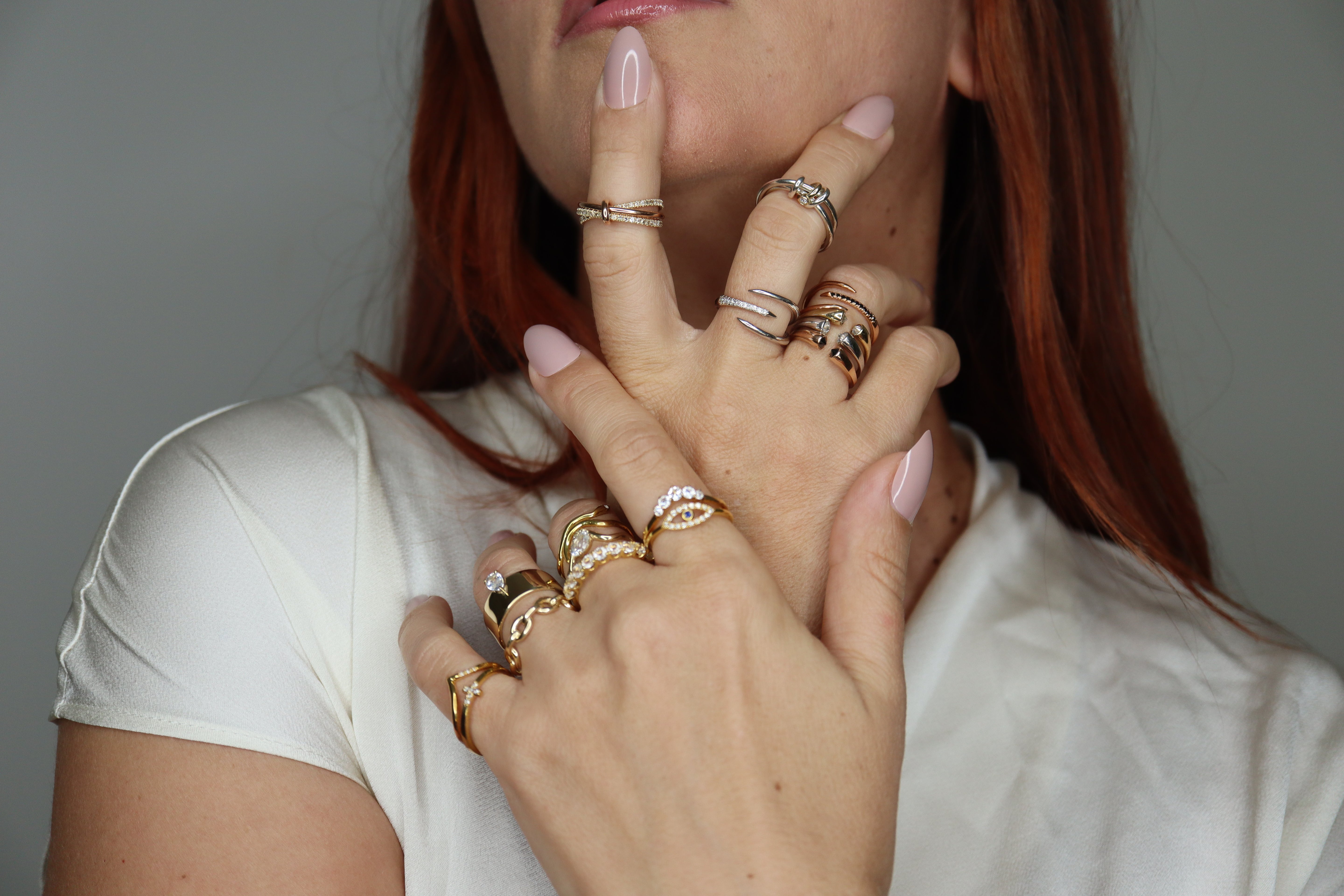
Understanding jewelry pricing helps you compare pieces more clearly. A simple gold band, a pavé diamond ring, and a kinetic ring can all be made from solid 14k gold, but their prices may differ because they require different amounts of gold, different stones, and very different levels of craftsmanship. If you are comparing examples, start with solid 14k gold rings.
Instead of looking at price alone, compare what the price includes: gold weight, karat, gemstone quality, hand-finishing, stone setting, design complexity, production location, service, and the selling model behind the piece.
Jewelry Pricing Breakdown by Cost Component
Most fine jewelry prices are built from several cost components, not just the raw value of the gold or gemstones. A solid gold ring may look simple from the outside, but its final price can include metal value, stone quality, skilled bench work, design time, finishing, quality control, packaging, shipping, and the selling model behind the piece.
| Cost component | Typical share of price | What affects it |
|---|---|---|
| Gold material | 30% to 50% | Gold weight, karat, market gold price, and alloy type |
| Gemstones | 0% to 30% | Stone type, size, quality, quantity, and setting style |
| Labor and craftsmanship | 20% to 40% | Casting, finishing, stone setting, polishing, fitting, and assembly |
| Design and development | Varies | Original design, prototyping, testing, and refinement |
| Overhead and service | Varies | Workshop costs, packaging, insured shipping, customer support, and operations |
| Retail markup | Varies widely | Wholesale layers, showroom costs, advertising, brand positioning, and business margin |
These percentages are general ranges. A plain solid gold band may have a higher percentage of its price tied to gold material, while a pavé diamond ring or kinetic ring may have a higher percentage tied to labor, gemstones, and construction complexity.
How Much of Jewelry Pricing Is the Gold Itself?
Gold is one of the clearest parts of jewelry pricing because it has a daily market value. The baseline material cost of a solid gold ring depends on the ring’s gram weight, karat, and the current gold price per gram.
For 14k gold, 58.3% of the ring’s total weight is pure gold. The remaining weight comes from alloy metals that give the ring its color, strength, and durability. To estimate the pure gold material value of a 14k ring, multiply the ring’s total weight in grams by 0.583, then multiply that number by the current gold price per gram.
14k gold material formula: ring weight in grams × 0.583 × current gold price per gram = approximate pure gold material value.
For example, a 10-gram 14k gold ring contains about 5.83 grams of pure gold. The final retail price will be higher than the raw gold value because it also includes labor, design, finishing, production costs, service, and business margin.
Gold material often represents a larger share of the price in simple, heavier rings. In more complex designs, the gold still matters, but labor, stone setting, movement engineering, or gemstones may make up a larger share of the final price. To understand why gram weight matters, read more about how gold ring weight affects value.
This is also why solid 14k gold rings cost more than plated, filled, or vermeil alternatives. Solid gold contains precious metal throughout the piece, not just on the surface. For a deeper comparison, read about solid gold vs plated, vermeil, and gold-filled jewelry.
For a deeper comparison of gold purity and durability, read about 14k vs 18k vs 24k gold.
How Gemstones Affect Jewelry Price
Gemstones can change the price of a ring significantly. A plain solid gold ring has no gemstone cost, while a diamond pavé ring or one-of-a-kind colored gemstone ring may include stones that represent a meaningful share of the final price. Stone type, size, quality, quantity, and setting style all affect the cost.
Diamonds
Diamonds are priced by carat weight, cut, color, clarity, and setting complexity. A single diamond may add cost because of its individual quality grade, while pavé settings add cost because many small diamonds must be placed and secured one by one. That level of precision requires both material and skilled stone-setting labor.
For example, a design like the Vortexa uses diamond pavé across rolling bands, which means the price reflects not only the diamonds themselves but also the labor required to set them securely. You can also compare similar stone-forward designs in the pavé diamond gemstone rings collection.
Rubies and sapphires
Rubies and sapphires are priced by color, clarity, origin, size, and cutting quality. Rich color saturation, strong transparency, and clean appearance usually increase price. High-quality rubies and sapphires can cost more than many shoppers expect because fine natural color is rare.
For more detail, read about ruby quality factors and sapphire quality factors.
Morganite, aquamarine, and other colored gemstones
Morganite, aquamarine, and other colored gemstones may allow for larger center stones at a more accessible price than diamonds, rubies, or sapphires. Their value still depends on color, clarity, cut, size, and how well the setting protects and presents the stone.
One-of-a-kind gemstone pieces may also cost more because the design is built around a specific stone rather than repeated from a standard production model. Browse one-of-a-kind gemstone rings to see how stone selection, setting style, and design complexity can shape the final price.
How Labor and Craftsmanship Affect Jewelry Price
Labor is one of the biggest reasons two pieces of jewelry with similar gold weight can have very different prices. A simple solid gold band, a pavé diamond ring, and a kinetic ring may all begin with precious metal, but they do not require the same amount of skilled work.
Simple solid gold bands
A simple gold band may require casting, cleaning, shaping, polishing, and final inspection. The labor is still skilled, but the process is more direct than a ring with stones, moving parts, or multiple components.
Kinetic rings with moving parts
Kinetic rings require more labor because each moving element must be made, fitted, assembled, tested, and finished. A ring with articulated links or interlocking bands is not one static piece of gold. It is a small mechanical object that has to move smoothly while still feeling secure on the hand.
This is why gold kinetic rings often cost more than simple bands of similar width. The price reflects not only the gold itself, but also the time and precision required to make the movement work properly.
Pavé and gemstone setting
Stone setting adds another layer of labor. Pavé setting is especially time-intensive because each small diamond or gemstone needs its own seat, alignment, and secure setting work. Even when the stones are small, the labor required to place them cleanly can be significant.
Labor and craftsmanship are also where handmade jewelry differs most from mass production. A handmade or small-batch piece usually receives more individual attention during fitting, polishing, stone setting, and quality control. For a deeper comparison, read more about handmade vs mass-produced jewelry.
What Are Jewelry Making Charges?
Jewelry making charges are the labor and production costs added to the raw material value of a piece. They cover the work required to turn gold, gemstones, and a design into finished jewelry that can be worn safely and comfortably.
Making charges can include casting, bench work, stone setting, polishing, fitting, assembly, movement testing, quality control, and final finishing. A simple gold band may have lower making charges because the construction is more direct. A pavé ring, custom piece, or kinetic ring will usually have higher making charges because the work takes more time and skill.
Making charges are not the same as markup. Making charges reflect the cost of creating the piece. Markup reflects the selling structure after the piece is made, including business margin, service, operations, and the costs of bringing the jewelry to the customer.
This is why two rings with similar gold weight can have different prices. One may be a simple band, while the other may require gemstone setting, moving components, hand-fitting, or custom design work. The gold value may be similar, but the making charges can be very different.
How Design and Development Affect Price
Before a ring can be made, it has to be designed. Jewelry design can include concept development, sketches, technical drawings, CAD modeling, wax models, prototypes, fit testing, stone selection, and production refinement. These steps add cost because they happen before the finished piece is ever cast, polished, or set with stones.
Design work is especially important for kinetic rings, custom pieces, and one-of-a-kind gemstone jewelry. A simple band may follow a more direct production path, but a ring with movement, unusual proportions, rare stones, or a custom setting often needs more testing before it can be made correctly.
For ongoing collection pieces, the original design cost is spread across multiple rings over time. For a custom or one-of-a-kind piece, more of that design and development work belongs to a single ring, which can make the final price higher.
This is why one-of-a-kind jewelry and one-of-a-kind gemstone rings may cost more than repeatable production designs. The price reflects not only the materials, but also the time required to design around a specific stone, proportion, or movement concept.
For clients who want a piece made around a personal idea, stone, or design direction, the custom design process also includes consultation, design planning, sourcing, and production coordination.
How Overhead, Packaging, Shipping, and Service Affect Price
Jewelry pricing also includes the cost of running the workshop and supporting the customer experience. Fine jewelry requires specialized tools, casting equipment, polishing stations, stone-setting equipment, quality control, insurance, photography, website systems, payment processing, packaging, shipping, and customer support.
Production location can also affect price. Jewelry made in a small atelier in the United States usually carries higher labor, rent, utilities, and operating costs than jewelry made in a large offshore factory. Those costs are part of the final price, but they can also support closer quality control, smaller production runs, and more direct oversight during production.
Packaging and shipping are also part of the cost structure. A fine jewelry order often requires protective packaging, insured delivery, tracking, payment processing, and support before and after purchase. When these services are included in the listed price, the customer may not see them as separate fees, but they are still part of what it costs to sell and deliver the piece properly.
These overhead and service costs do not replace the value of the gold, gemstones, or craftsmanship. They support the process around the jewelry so the finished piece can be made, inspected, packed, shipped, and supported with care.
What Is Jewelry Markup?
Jewelry markup is the amount added above the cost of materials, labor, design, overhead, and production to create the final retail price. It helps cover business margin, customer service, marketing, unsold inventory risk, payment processing, returns, packaging, shipping, and the cost of operating the business.
Markup varies widely depending on how the jewelry is sold. A piece sold through a traditional wholesale and retail chain may pass through several pricing layers before reaching the customer. A piece sold directly by the designer or atelier may have a different pricing structure because there are fewer middle steps between maker and wearer.
Markup is not the same as making charges. Making charges reflect the work required to create the jewelry. Markup reflects the selling model after the piece is made. Both can affect the final price, but they represent different parts of the pricing structure.
A higher price does not automatically mean unfair markup, and a lower price does not automatically mean better value. The more important question is what the price includes: solid gold weight, karat, gemstone quality, setting work, hand-finishing, design originality, production standards, service, and long-term wearability.
Why Direct-from-Atelier Jewelry Can Be Priced Differently
The way jewelry is sold can affect its final price. A piece sold through a traditional retail chain may move from maker to wholesaler to retailer before it reaches the customer. Each step can add cost because each business needs to cover its own operations, inventory risk, service, and margin.
A direct-from-atelier model works differently. The jewelry is designed, produced, and sold closer to the source, with fewer layers between the maker and the wearer. That does not mean the piece is inexpensive, but it can mean that more of the final price is tied to the jewelry itself: the gold, gemstones, design work, craftsmanship, finishing, and service.
This model is especially relevant for handmade and small-batch jewelry. Instead of paying for large retail showrooms, wholesale distribution, or mass advertising, the price can reflect a more direct production process and a closer relationship between the studio and the customer.
For complex designs such as gold kinetic rings, the atelier model also supports closer quality control. Moving parts, articulated links, pavé settings, and custom details all benefit from careful inspection during production and finishing.
This is one reason two rings with similar materials can have different prices. The final cost depends not only on what the ring is made from, but also on how it is made, where it is made, and how many steps it passes through before reaching the customer. For more context, read about handmade and mass-produced jewelry.
How to Compare Jewelry Prices Across Different Jewelers
To compare jewelry prices fairly, look beyond the final number. Two rings may appear similar in photos but differ in gold weight, karat, gemstone quality, setting work, construction, production location, and what is included with the purchase.
- Gold content: Is the piece solid gold, gold filled, vermeil, or plated?
- Gold weight: How many grams does the ring weigh?
- Karat: Is it 10k, 14k, 18k, or 24k gold?
- Gemstones: What stones are used, and what quality are they?
- Labor: Is the piece handmade, cast in small batches, mass-produced, or custom?
- Construction: Is it a simple band, pavé setting, kinetic ring, or one-of-a-kind design?
- Included service: Are shipping, insurance, packaging, support, and resizing guidance included?
- Selling model: Is the jewelry sold direct from maker, through a showroom, through wholesale, or through a marketplace?
Gold weight is one of the most useful comparison points because it reveals how much precious metal is actually in the piece. If two rings are both solid 14k gold but one weighs much more, the heavier ring usually contains more gold and may have higher intrinsic material value. For more context, read about how gold weight affects ring value.
Price range can also help you compare options. Looking at jewelry grouped by budget can make it easier to see how gold weight, gemstones, construction, and design complexity affect pieces at different price points.
How Much Should You Expect to Spend on a Solid Gold Ring?
The price of a solid gold ring depends on gold weight, karat, gemstones, ring size, band width, construction, and labor. A simple solid gold band usually costs less than a wide pavé ring, a one-of-a-kind gemstone ring, or a kinetic ring because it requires less gold, fewer components, and less bench work.
At lower price points, you may see slimmer bands, simpler settings, smaller stones, or lighter gold weight. At higher price points, the cost often reflects more gold, larger or higher-quality gemstones, pavé setting, custom details, wider bands, or moving components that require more time to make and finish.
A solid 14k gold ring should not be compared only by appearance. Two rings may look similar in photos, but the heavier ring may contain more gold, the handmade ring may require more skilled labor, and the gemstone ring may include stone sourcing, setting work, and added quality control.
If you are comparing budgets, browse fine jewelry under $2,000, fine jewelry under $2,500, and fine jewelry under $3,000 to see how gold weight, gemstones, movement, and design complexity affect the final price.
Frequently Asked Questions About Jewelry Pricing
How is jewelry pricing calculated?
Jewelry pricing is calculated from materials, gemstones, labor, design, overhead, service, and markup. For solid gold rings, gold weight and karat are major factors, but craftsmanship and construction can also change the final price significantly.
What affects the price of gold jewelry?
The price of gold jewelry is affected by gold weight, karat, current gold market price, gemstones, labor, design complexity, production location, brand structure, and retail markup.
How do jewelers price gold jewelry?
Jewelers often begin with the material value of the gold, then add labor, gemstones, design work, overhead, service, and markup. A 14k gold piece contains 58.3% pure gold, so the pure gold value depends on total gram weight and the current gold price.
What are jewelry making charges?
Jewelry making charges are the labor and production costs required to create a piece. They can include casting, stone setting, polishing, fitting, assembly, quality control, and design time.
What is the typical markup on jewelry?
Jewelry markup varies widely by business model. Traditional retail, wholesale, showroom, marketplace, and direct-from-maker pricing structures can all use different markups. The more important question is what the price includes in materials, labor, quality, and service.
Why is handmade jewelry more expensive?
Handmade jewelry is often more expensive because skilled artisans spend more time casting, fitting, setting, polishing, and finishing each piece. Complex designs, pavé settings, and moving components require more labor than simple mass-produced pieces.
Why are kinetic rings more expensive than simple bands?
Kinetic rings are more expensive because they include multiple moving or interlocking components. Each piece must be made, fitted, assembled, tested, and finished so the movement works properly.
How much does a solid gold ring cost?
A solid gold ring’s cost depends on gram weight, karat, gemstones, ring size, band width, construction, and labor. Simple bands usually cost less than wide, pavé, custom, or kinetic designs.
Does more gold weight mean a higher price?
Usually, yes. A heavier solid gold ring contains more metal, which raises material cost. But a lighter ring with complex gemstones, pavé setting, or custom design work can still cost more because labor and stones also affect price.
Why do two similar-looking rings have different prices?
Two rings can look similar but differ in gold weight, karat, gemstone quality, construction, labor, finish, production location, warranty, service, and markup. Those details can change the final price significantly.
Compare Jewelry Prices With More Confidence
When you understand how jewelry pricing works, it becomes easier to compare pieces by more than appearance alone. Look at gold weight, karat, gemstones, labor, construction, production model, and what is included in the final price.
A lower price may reflect a lighter ring, simpler construction, plated materials, fewer services, or mass production. A higher price may reflect solid gold, more gram weight, higher-quality stones, handmade finishing, kinetic movement, custom design, or small-batch production.
Explore Antoanetta’s 14k gold rings and gold kinetic rings to compare how material, design, movement, gemstones, and craftsmanship shape the final price.