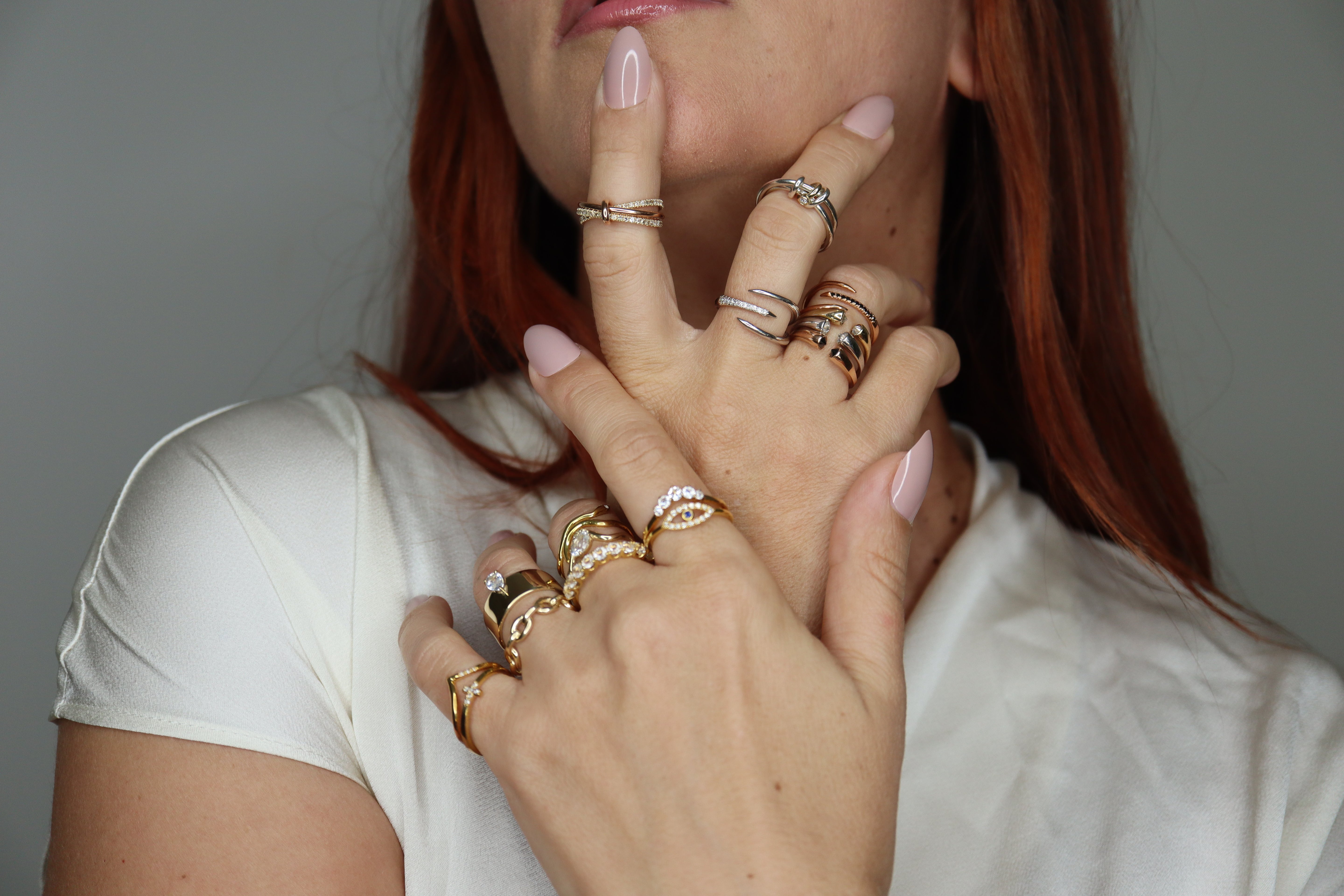





How Much Does a Gold Ring Weigh? Average Weight in Grams
A typical solid gold ring weighs between 3 and 15 grams. Thin gold bands may weigh 2 to 4 grams, everyday solid gold rings often fall around 4 to 8 grams, and wide bands or kinetic rings can weigh 8 to 15 grams or more depending on ring size, band width, thickness, gold purity, gemstones, and design complexity.
Gold ring weight matters because it affects how the ring feels, how much gold it contains, how durable it may be, and how much intrinsic material value it holds. For shoppers comparing solid 14k gold rings, weight is one of the clearest ways to understand the difference between a lightweight ring, a substantial everyday ring, and a heavier design with more presence on the hand.
You will learn what ring weight means in grams, how much a 14k gold ring usually weighs, how to estimate pure gold content, and why solid gold feels different from hollow, plated, or gold-filled jewelry.
Average Gold Ring Weight by Ring Type
Gold ring weight varies by ring size, band width, thickness, gemstones, and construction. As a general range, most solid gold rings weigh between 3 and 15 grams, with slimmer bands at the lighter end and wide or multi-component rings at the heavier end.
| Ring type | Typical weight range | What the weight usually means |
|---|---|---|
| Thin gold band | 2 to 4 grams | Lightweight, minimal, and less substantial on the finger |
| Standard solid gold ring | 4 to 8 grams | Good everyday weight, durability, and comfort |
| Wide gold band | 6 to 12 grams | More gold content, stronger presence, and a more substantial feel |
| Kinetic or multi-component gold ring | 8 to 15+ grams | Heavier because moving links, interlocking bands, or added components increase total gold weight |
These ranges are estimates, not fixed rules. A narrow ring in a larger size can weigh more than expected, while a wide ring with a thin profile may feel lighter than its width suggests. For shoppers who prefer a more substantial feel, wide gold band rings and kinetic designs usually sit toward the heavier end of the range.
How Is Gold Weight Measured in Jewelry?
Jewelers usually measure ring weight in grams, written as g. Some jewelers also use pennyweight, written as dwt. One pennyweight equals 1.555 grams. Gold markets price gold by the troy ounce, and one troy ounce equals about 31.1 grams.
When a ring is listed as weighing 8 grams, that usually means the total finished ring weight. This can include the gold alloy, gemstones, and any design components. It does not mean the ring contains 8 grams of pure gold unless the ring is 24k gold.
For 14k gold, only 58.3% of the ring’s total weight is pure gold. The remaining weight comes from alloy metals that make the ring stronger for everyday wear. That is why a 10-gram 14k gold ring contains about 5.83 grams of pure gold, not 10 grams of pure gold.
- 1 pennyweight: 1.555 grams
- 1 troy ounce: about 31.1 grams
- 14k gold: 58.3% pure gold
- 18k gold: 75% pure gold
- 24k gold: nearly pure gold
Pure gold is very dense, which is why even a small gold ring can feel substantial in the hand. A solid gold ring will usually feel heavier than a hollow, plated, or gold-filled ring of similar size because it contains more metal throughout the band.
How Much Does a 14k Gold Ring Weigh?
A 14k gold ring usually weighs about 3 to 15 grams, depending on ring size, band width, thickness, gemstones, and design complexity. A slim 14k gold band may weigh only 2 to 4 grams, while a wider or more detailed ring can weigh 8 grams or more.
The weight of a 14k gold ring is not the same as its pure gold content. Because 14k gold is 58.3% pure gold, the rest of the ring’s weight comes from alloy metals that make the ring stronger for daily wear. For example, a 10-gram 14k gold ring contains about 5.83 grams of pure gold.
This is one reason 14k gold is practical for everyday jewelry: it offers real gold content, a substantial feel, and better durability than higher-karat gold that is softer and easier to bend or scratch.
How Many Grams of Gold Are in a Ring?
The number of grams of gold in a ring depends on two things: the ring’s total weight and its karat. A ring’s listed weight usually refers to the finished piece, not the amount of pure gold inside it. For example, a 14k gold ring contains 58.3% pure gold, while the rest comes from alloy metals that give the ring strength and durability.
To estimate pure gold content in a 14k ring, multiply the ring’s total weight in grams by 0.583. A 6-gram 14k gold ring contains about 3.5 grams of pure gold. A 10-gram 14k gold ring contains about 5.83 grams of pure gold.
| Total 14k ring weight | Approximate pure gold content |
|---|---|
| 4 grams | 2.33 grams of pure gold |
| 6 grams | 3.50 grams of pure gold |
| 8 grams | 4.66 grams of pure gold |
| 10 grams | 5.83 grams of pure gold |
| 12 grams | 7.00 grams of pure gold |
This pure gold content is part of what gives solid gold jewelry its lasting material value. It is also why two rings that look similar in photos can feel very different in person: the heavier solid gold ring usually contains more metal throughout the band.
Why Do Heavier Gold Rings Feel More Substantial?
Heavier gold rings often feel more substantial because they contain more metal. In solid gold jewelry, extra weight usually comes from a thicker band, a wider profile, a larger ring size, gemstones, or added design components. That added material gives the ring more presence on the finger.
Gold is also naturally dense. Pure gold has a density of about 19.3 grams per cubic centimeter, making it much denser than most common jewelry metals. A 14k gold alloy is lighter than pure gold, but it still has the recognizable weight and substance people associate with solid gold jewelry.
This is why two rings can look similar in photos but feel very different in person. A hollow gold ring may have the same outer shape as a solid gold ring, but it usually feels lighter because there is less metal inside the band. A solid gold ring carries more weight throughout the piece, which can make it feel more grounded, durable, and valuable.
Weight alone does not prove quality, but it is a useful clue. A well-made solid gold ring with enough metal for daily wear will usually feel different from a thin, hollow, plated, or gold-filled alternative. If you are comparing jewelry types, read the comparison of solid gold vs plated, vermeil, and gold-filled jewelry.
How Does Gold Weight Affect a Ring’s Value?
Gold weight affects a ring’s intrinsic material value because a heavier solid gold ring usually contains more gold. To estimate the pure gold value of a 14k ring, multiply the ring’s total weight by 0.583, then multiply that number by the current gold spot price per gram.
14k gold value formula: ring weight in grams × 0.583 × current gold price per gram = approximate pure gold value.
This estimate gives you the ring’s approximate melt value, meaning the value of the gold content alone. It does not include craftsmanship, design complexity, gemstones, finishing, rarity, brand value, or the labor required to make the ring.
For example, an 8-gram 14k gold ring contains about 4.66 grams of pure gold. A 12-gram 14k gold ring contains about 7 grams of pure gold. The heavier ring has more intrinsic gold value because it contains more pure gold by weight.
This is one reason solid gold jewelry holds more long-term material value than plated, vermeil, or gold-filled alternatives. Those pieces may have a gold surface layer, but they contain far less gold by weight. Read more about 14k gold jewelry as an investment.
Why Do Kinetic Rings Weigh More Than Standard Gold Bands?
A standard gold band is usually one continuous piece of metal. A kinetic ring may include moving links, interlocking bands, connector elements, layered details, or gemstone settings. Each added component increases the total amount of gold in the finished ring, which can make the piece heavier than a simple band of similar width.
That extra weight is part of what gives gold kinetic rings their distinctive feel. As the moving parts shift, roll, or rotate, the wearer can feel small changes in weight and balance across the finger. This tactile movement depends on solid material. A lighter hollow or plated construction would not create the same sensation.
For example, a multi-link ring like the Alizée carries weight across several articulated gold components. A rolling design like the Vortexa distributes weight through interlocking bands that move around the finger. A more substantial design like the Marque combines band width, gold content, and kinetic detail for a stronger sense of presence.
This is why kinetic rings often feel different from static bands. The weight is not only about grams on a scale. It shapes how the ring moves, how it rests on the hand, and how much feedback the wearer feels throughout the day.
How Band Width and Thickness Affect Gold Ring Weight
Band width and thickness are two of the biggest factors in gold ring weight. Width is how much space the ring covers across your finger. Thickness is how much metal sits between the outside surface and the inside of the band. A ring that is both wide and thick will usually weigh more than a narrow or thin ring in the same size.
A slim gold ring can feel light and easy to wear because it uses less metal. A wider ring uses more gold across the finger, and a thicker ring adds more depth to the band. When width and thickness increase together, the finished ring usually feels more substantial.
This is why wide gold band rings often weigh more than delicate bands. The added gold gives the ring a stronger presence, but it can also change the way the ring fits. Wider bands may feel snugger than narrow rings because they cover more surface area on the finger.
For example, a slimmer design like the Harmony will usually feel lighter than a wider or more structured ring. Wider designs usually carry more presence because of their width, gold content, and construction.
If you are choosing a heavier ring for everyday wear, comfort matters as much as weight. The right ring should feel grounded without feeling restrictive. Read more about how kinetic rings feel during everyday wear.
How to Evaluate Gold Ring Weight When Shopping
Weight alone does not tell you everything about a ring, but it can help you understand how substantial the piece is likely to feel. When comparing gold rings, look at the listed gram weight together with the ring size, band width, thickness, karat, gemstones, and construction type.
2 to 3 grams: very lightweight
A gold ring in this range is usually slim, delicate, or made with less metal. It may be comfortable for minimal everyday wear, but it will not feel as substantial as a thicker solid gold ring. If the ring looks large but weighs only 2 to 3 grams, check whether it is hollow or unusually thin.
4 to 8 grams: solid everyday weight
This is a common range for well-made solid gold rings. A ring in this range often has enough weight to feel durable and present on the hand without feeling too heavy for daily wear.
8 to 15+ grams: substantial or complex design
Gold rings in this range are usually wider, thicker, larger in size, set with stones, or built with multiple components. This is common for statement bands, kinetic rings, and designs with more gold throughout the structure.
If you are choosing between lightweight and substantial designs, compare the ring’s listed weight with its construction. A solid 6-gram ring may feel more valuable and durable than a larger hollow ring with the same outer shape. For a stronger everyday feel, browse solid 14k gold rings or more substantial wide gold band rings.
Frequently Asked Questions About Gold Ring Weight
How much does a gold ring usually weigh?
A gold ring usually weighs between 3 and 15 grams. Thin bands may weigh 2 to 4 grams, standard solid gold rings often weigh 4 to 8 grams, and wide or kinetic rings can weigh 8 to 15 grams or more.
How much does a 14k gold ring weigh?
A 14k gold ring usually weighs about 3 to 15 grams, depending on ring size, band width, thickness, gemstones, and design complexity. A slim 14k band may be much lighter than a wide or multi-component 14k ring.
How many grams of pure gold are in a 14k ring?
A 14k gold ring is 58.3% pure gold. To estimate pure gold content, multiply the ring’s total weight by 0.583. For example, an 8-gram 14k ring contains about 4.66 grams of pure gold.
Does a heavier gold ring mean better quality?
A heavier gold ring often contains more metal, which can mean more material value, stronger structure, and a more substantial feel. But quality also depends on craftsmanship, finishing, comfort, design, and whether the ring is solid, hollow, plated, or filled.
How much does a gold wedding band weigh?
A gold wedding band often weighs between 3 and 10 grams, depending on finger size, band width, thickness, and karat. Wide wedding bands or thicker comfort-fit bands can weigh more.
Is gold weight the same as gold content?
No. Gold weight usually means the total weight of the finished ring. Gold content means the amount of pure gold inside the alloy. A 10-gram 14k ring contains about 5.83 grams of pure gold.
Can a lightweight gold ring still be solid gold?
Yes. A lightweight ring can still be solid gold if it is narrow, thin, or made in a smaller ring size. Weight alone does not prove quality, but a very light ring should be checked for construction type, karat, and durability.
Why do kinetic rings weigh more?
Kinetic rings can weigh more because they include moving links, interlocking bands, layered parts, or added design components. More components usually mean more gold, which increases the total weight of the finished ring.
Choosing the Right Gold Ring Weight
The right gold ring weight depends on how you want the ring to feel. A lighter band can feel minimal, easy to wear, and barely noticeable on the hand. A heavier solid gold ring can feel more grounded, durable, and substantial.
When comparing rings, look at the gram weight together with the band width, thickness, karat, gemstones, and construction. A simple narrow band and a kinetic ring may both be made from solid 14k gold, but they will feel different because they use different amounts of metal in different ways.
Explore Antoanetta’s 14k gold rings, gold kinetic rings, and wide gold band rings to compare how gold weight, movement, and band structure shape the way a ring feels on the hand.