



How Much to Spend on a Gold Ring: Cost-Per-Wear, Price Tiers, and What Drives the Price
How Much Should You Spend on a Solid Gold Ring?
How much you should spend on a solid gold ring depends on what you are getting for the price and how long it will last, not a fixed dollar amount or percentage of income. A $50 gold-plated ring and a $1,500 solid gold ring look similar on screen. The difference reveals itself over time - in how the ring wears, how it ages, what it is worth in ten years, and how it makes you feel every day between now and then.
This guide reframes the price conversation from a single transaction to a lifetime of value, because that is how solid gold jewelry actually works.
How Does Cost-Per-Wear Change the Way You Think About Ring Prices?
Cost-per-wear is the most honest way to evaluate any piece of jewelry you plan to wear regularly. The formula is simple: divide the purchase price by the number of days you expect to wear it.
A $50 plated ring worn daily for 8 months before the plating visibly deteriorates: $50 ÷ 240 days = $0.21 per wear. Then you throw it away and buy another one.
A $500 solid gold band worn daily for 20 years: $500 ÷ 7,300 days = $0.07 per wear. And at the end, you still own it.
A $1,500 kinetic ring worn daily for 20 years: $1,500 ÷ 7,300 days = $0.21 per wear. Same daily cost as the plated ring, but you own a handcrafted solid gold piece that retains value and can be passed down.
A $2,500 gemstone kinetic ring worn daily for 30 years: $2,500 ÷ 10,950 days = $0.23 per wear. Less than a cup of coffee, for a piece of fine jewelry that has been on your finger through three decades of your life.
The plated ring buyer who replaces annually spends $1,000 over twenty years and owns nothing at the end. The solid gold buyer spends once and owns a piece worth at least its gold content indefinitely. Read the investment guide for more on long-term value retention.
What Determines the Price of a Solid Gold Ring?
Understanding where your money goes helps you choose confidently at any budget. The price of a solid gold ring is driven by four primary factors:
Gold weight: More gold means a higher price. A slim 3mm band uses less gold than a wide 6mm kinetic ring with multiple moving components. The gold content is the largest single cost factor, and it scales directly with the ring's size, width, and construction complexity. The gold weight guide explains how grams translate to both feel and price.
Construction complexity: A simple band requires straightforward casting and finishing. A kinetic ring with seven articulated links requires each link to be individually cast, fitted, tested for movement, and assembled by hand. The labor hours involved are significantly higher, which is reflected in the price. The pricing transparency guide breaks this down in detail.
Gemstones: Diamond pavé, rubies, sapphires, and other precious stones add both material cost and setting labor to the final price. A plain gold kinetic ring and the same design with diamond-set moving links will differ in price by the cost of the diamonds plus the skilled labor to set them.
Production location: Jewelry made in a Los Angeles atelier by skilled American artisans carries higher labor costs than factory production overseas. This cost reflects living wages, quality control standards, and the direct relationship between maker and wearer that defines the atelier experience.
What Do You Get at Each Price Tier for Solid Gold Rings?
$300 to $600: Entry-level solid gold. This range covers simpler solid 14k gold designs, thinner bands, minimal or no gemstones. These pieces offer the full durability and permanence of solid gold without the complexity of kinetic mechanisms or extensive gemstone work. An excellent starting point for building a fine jewelry collection.
$600 to $1,200: Mid-range craftsmanship. This tier introduces more design complexity, wider bands, simpler kinetic elements, and small gemstone accents. The construction is more involved than a basic band, and the ring begins to carry the visual and tactile presence that distinguishes fine jewelry from everyday accessories.
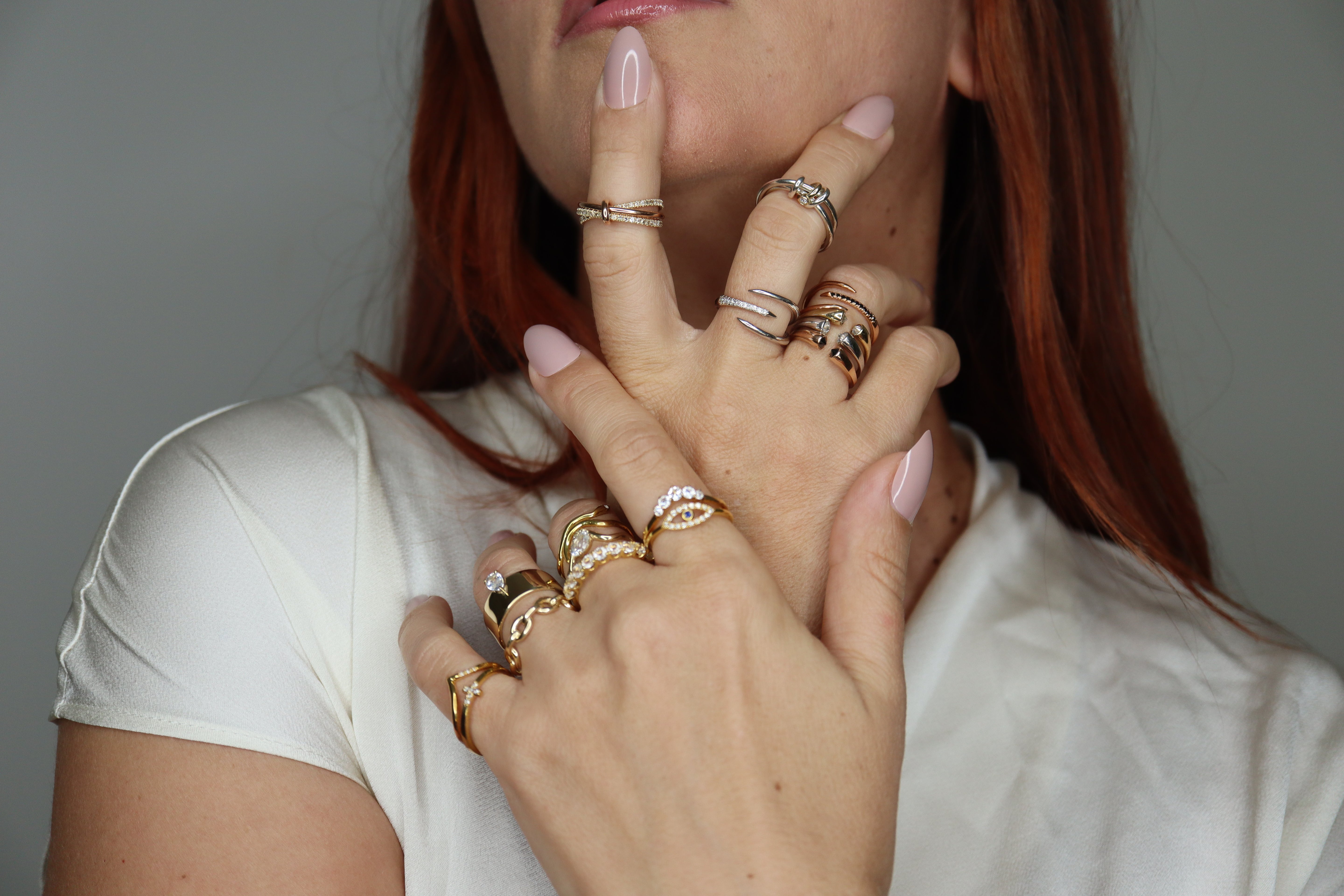
$1,200 to $2,000: Signature kinetic designs. This is where Antoanetta's kinetic rings with multiple moving links, rolling bands, and mixed metal construction live. The craftsmanship hours are substantial, the gold content is significant, and the wearing experience is fundamentally different from a static ring.
$2,000 and above: Gemstone kinetic and premium designs. Diamond-set kinetic rings, multi-stone designs, and the most complex constructions in the collection. These pieces represent the highest concentration of material value, design complexity, and skilled labor. The Vortexa with its diamond pavé rolling bands in two gold colors exemplifies this tier.
Browse the full collection to see what each price level offers.
How Do You Decide What to Spend on a Ring for Yourself?
There is no universal rule for how much to spend on a ring for yourself. The old "two months' salary" guideline was invented by a diamond company's marketing department and applies to engagement rings purchased by partners, not to self-purchased fine jewelry. Your budget is yours to set based on what feels right for your financial situation and how much value the piece will bring to your daily life.
A few practical frameworks that help:
The daily joy test: Will you wear this ring every day and get genuine pleasure from it? If yes, the cost-per-wear math almost always justifies a higher-quality piece. If it will sit in a drawer most days, spend less or reconsider whether a ring is the right purchase right now.
The replacement test: If you buy a less expensive alternative, will you want to replace it within a year or two? If the answer is yes, you are likely to spend more over time than you would on a single quality piece today.
The regret test: Which would you regret more - spending a bit more on the piece you truly want, or saving money on a compromise piece that never fully satisfies you? Most people who buy quality jewelry report zero regret. Many who compromise report wishing they had waited and bought what they really wanted.
Why Does the Self-Purchase Mindset Change the Spending Decision?
Buying jewelry for yourself changes the spending calculus. You are not trying to impress someone else or meet an external expectation. You are investing in something that brings you daily satisfaction, marks a milestone, or simply reflects who you are. This is one of the most personally meaningful categories of spending you can make.
The right-hand ring guide explores the self-purchase philosophy in depth. The key insight is that you deserve to own something beautiful without waiting for someone else to buy it for you. The question is not whether you should invest in yourself. It is which piece best represents the investment you want to make.
Frequently Asked Questions About How Much to Spend on a Gold Ring
Is it worth spending more on a kinetic ring vs. a plain band?
If the kinetic movement appeals to you, yes. The additional cost reflects significantly more gold, more labor hours, and a fundamentally different wearing experience. If you prefer simplicity, a well-made solid gold band is a perfectly worthy investment at a lower price point.
Can I start with something affordable and upgrade later?
Absolutely. Starting with a simpler solid gold piece and adding to your collection over time is one of the best approaches to building a jewelry wardrobe. Your first purchase does not need to be your most expensive. The stacking guide covers building a collection over time.
Does spending more guarantee better quality?
Within solid gold jewelry from reputable makers, spending more typically gets you more gold, more gemstones, and more complex construction rather than "better" gold. The gold quality in a $500 solid 14k ring is identical to the gold in a $2,500 ring. The difference is quantity, design complexity, and gemstone content.