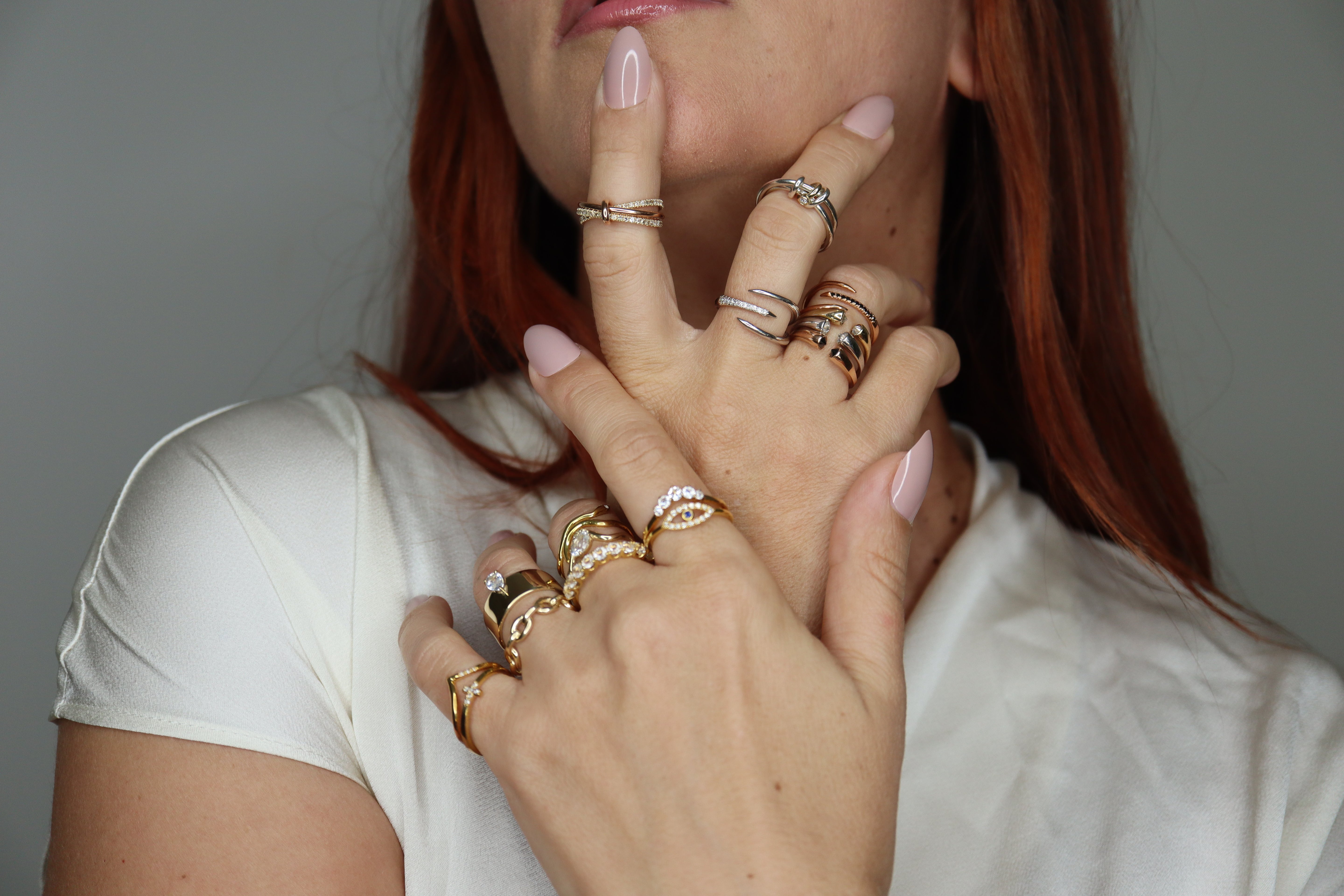





Right-Hand Rings: What They Mean, How to Choose One, and the Best Styles for Self-Purchase
What Is a Right-Hand Ring and Why Buy One for Yourself?
A right-hand ring is a ring you buy for yourself, on your own terms, worn on the hand that signals self-investment rather than commitment to a partner. The left hand has been claimed by tradition. Engagement rings, wedding bands, and the rituals that accompany them have defined the left ring finger for centuries. The right hand carries no such obligation. A ring on your right hand is not about a promise to someone else. It is about a promise to yourself.
The right-hand ring movement is one of the most significant shifts in jewelry culture over the past two decades. Women buying rings for themselves, for their own reasons, and wearing them on the hand that carries no traditional expectations. If you are considering a ring for your non-dominant or right hand, you are choosing one of the most personal and intentional pieces of jewelry you can own.
Why Choose the Right Hand for a Ring?
The cultural significance is simple: a ring on the right hand is self-purchased and self-directed. It is not a gift from a partner. It is not a symbol of a relationship. It marks a personal milestone, a career achievement, a birthday, a moment where you decided you deserve something beautiful, or no occasion at all beyond wanting it.
This distinction matters because it changes the selection criteria. When choosing a ring for the left hand, many people factor in a partner's taste, traditional expectations, and the need to match an engagement ring. The right hand has none of those constraints. You choose based entirely on your own aesthetic, your own comfort preferences, and what makes you feel like the best version of yourself when you look at your hand.
How Do You Choose a Ring for the Right Hand?
Go bolder than your left hand. If your left hand carries a classic engagement ring and wedding band, the right hand is where you can express the part of your style that those traditional pieces do not cover. A kinetic ring, a wider band, a darker gemstone, a design with more visual complexity. The right hand is the canvas for the jewelry you choose when no rules apply.
Consider your dominant hand. If you are right-handed, the ring on your right hand encounters more friction, more contact with surfaces, and more visibility throughout the day. This makes the material choice especially important, as solid 14k gold handles the increased wear without degradation. It also means the ring is more visible to others because your dominant hand leads most gestures and activities.
Size your right hand separately. Your dominant hand is typically slightly larger than your non-dominant hand. If you know your left-hand ring size, do not assume it applies to the right. Measure the specific finger on the hand where you plan to wear the ring.
What Are the Best Ring Styles for the Right Hand?
Kinetic rings: The right hand is the natural home for kinetic jewelry. Because your dominant hand is in constant motion throughout the day, a ring with articulated links or rolling bands gets continuous activation. The movement is most visible on the hand that moves the most. The Alizée, Marque, and Aria are all compelling right-hand choices because their kinetic elements thrive on the dominant hand's activity.
Gemstone rings: A colored gemstone ring on the right hand makes a personal statement that differs from the diamond tradition of the left hand. Ruby, sapphire, morganite, and aquamarine all carry their own symbolism and visual identity. The Seraphina with rubies or the Dahlia with aquamarine provide color and character that stand apart from traditional engagement jewelry.
Wide bands: The right hand can carry a wider ring comfortably because it is accustomed to more activity and interaction. A 5-6mm band that might feel heavy on the left hand feels natural on the right because the dominant hand is stronger and more active. Read the wide band guide for sizing advice.
Mixed metal designs: Multi-tone rings work especially well on the right hand because they match anything else you wear without requiring coordination. The Aria in yellow, white, and rose gold matches any watch, bracelet, or earring combination on either hand.
Why Is a Right-Hand Ring an Act of Self-Investment?
Buying jewelry for yourself is an act of self-recognition. It is a tangible marker that says: I worked for this, I earned this, I chose this. The cultural shift toward self-purchased fine jewelry reflects a broader recognition that women do not need to wait for someone else to buy them something beautiful.
Antoanetta's entire design philosophy aligns with this mindset. The brand's voice speaks to women buying for themselves. The rings are designed for the wearer's pleasure and self-expression, not as gifts from others. The kinetic movement, the solid gold construction, the handcrafted Los Angeles production - all of it is built for the woman who knows what she wants and chooses it on her own terms.
A right-hand ring is the physical embodiment of that choice. Browse the collection and find the piece that matches who you are today, not who tradition says you should be.
What Milestones Can a Right-Hand Ring Celebrate?
While a right-hand ring needs no occasion, many women mark specific moments with a right-hand purchase:
Career milestones: A promotion, a business launch, reaching a revenue goal, completing a difficult project. The ring becomes a daily reminder of what you accomplished.
Decade birthdays: Turning 30, 40, 50. Each decade deserves a ring that reflects how your confidence and style have evolved.
Personal victories: Finishing a degree, overcoming a difficult period, starting a new chapter. The ring marks the transition and travels with you into whatever comes next.
No reason at all: The most empowering reason to buy yourself a ring is simply because you want it. No justification needed. No occasion required. Read the milestone rings guide for more on marking moments with jewelry.
Frequently Asked Questions About Right-Hand Rings
Which finger should a right-hand ring go on?
There are no rules. The ring finger of the right hand is the most traditional choice, but the middle finger and index finger are equally popular. The middle finger offers the most real estate for wider rings. The index finger is the most visible during daily gestures. Choose whichever finger feels right to you.
Can a right-hand ring be an engagement ring?
Of course. If you and your partner prefer the right hand for cultural, personal, or comfort reasons, any ring can serve as an engagement ring on either hand. In many European and South American cultures, the engagement ring traditionally goes on the right hand.
Is it worth investing in a right-hand ring the same way I would an engagement ring?
Absolutely. A solid 14k gold right-hand ring is built from the same materials, by the same process, with the same durability as any engagement ring. It retains the same gold value over time. If you wear it every day, it arguably gets more use than an engagement ring that may get removed for certain activities.