



Heirloom Jewelry: What Makes It Last, Which Materials Survive, and How to Buy for Generations
What Makes Fine Jewelry an Heirloom?
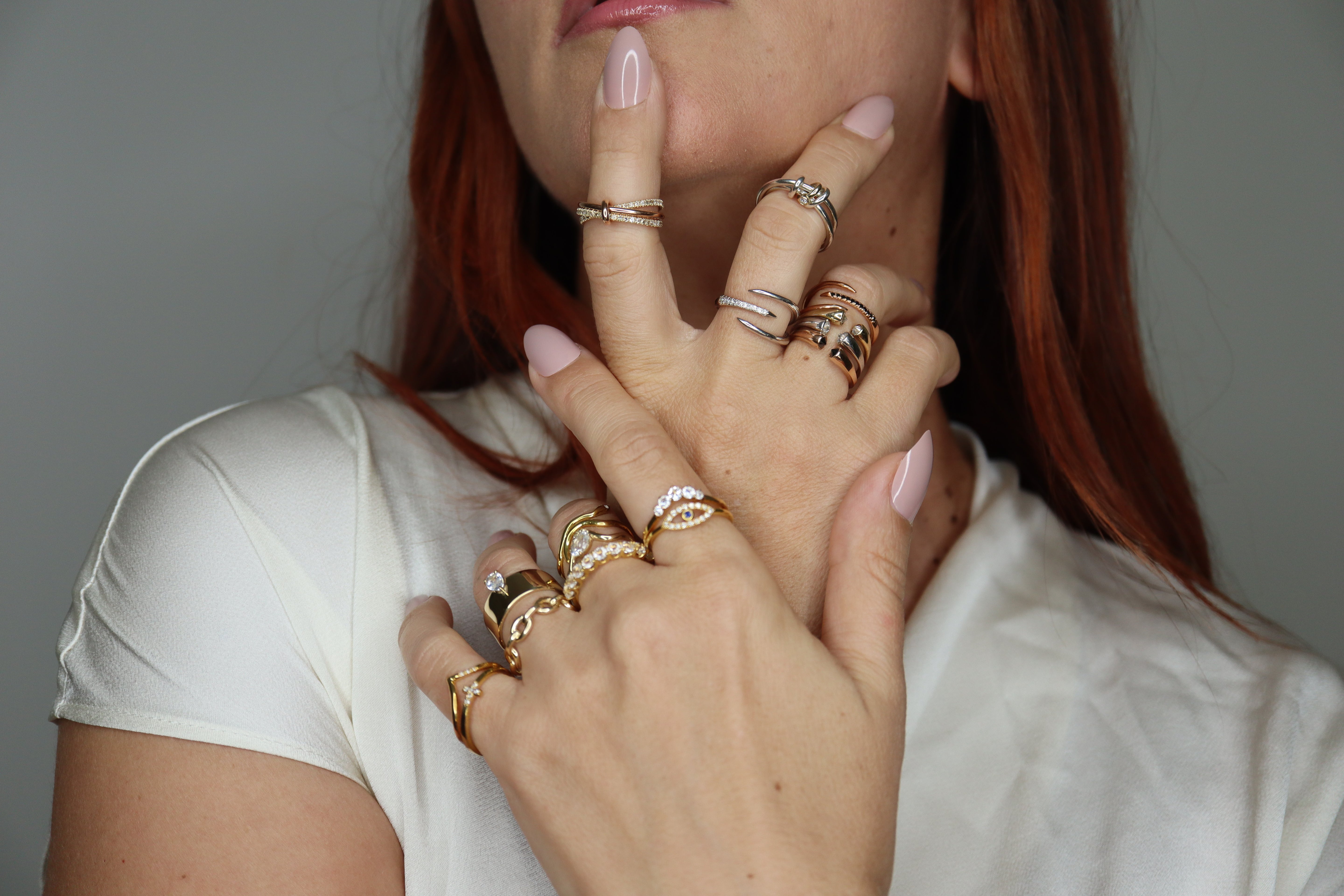
What makes fine jewelry an heirloom is not age or price - it is the combination of material integrity (solid gold that does not degrade), construction quality (craftsmanship that holds together across decades of daily wear), and timeless design (appeal rooted in proportion and craft rather than trends). Not every piece of jewelry becomes an heirloom. Most jewelry produced today is designed for a season, a trend, or a few years of wear before it deteriorates beyond use. The difference between jewelry that ends up in a landfill and jewelry that ends up on your granddaughter's finger comes down to those three things.
Understanding these criteria before you buy helps you choose pieces that are not just beautiful today but genuinely capable of lasting for generations.
Why Is Solid Gold the Only Material With Heirloom Potential?
The single most important factor in heirloom potential is what the ring is made of. Solid gold does not degrade over time. It does not oxidize, corrode, or break down with exposure to air, water, skin chemistry, or household chemicals. A solid 14k gold ring made today will be chemically and structurally identical to itself in one hundred years. The gold atoms do not change. The alloy does not weaken. The material is, for all practical purposes, permanent.
This is the fundamental divide between fine jewelry and everything else. Gold-plated jewelry has a microscopic layer of gold over a base metal core. Within months to years of regular wear, the plating wears through, exposing the base metal underneath, which then tarnishes, corrodes, and discolors. A gold-plated ring cannot be an heirloom because it will not physically survive long enough to become one.
Gold vermeil (gold over sterling silver) lasts longer than standard plating but still degrades over years of wear. Gold-filled jewelry is more durable than vermeil but still relies on a bonded gold layer over base metal rather than solid gold throughout. The material comparison guide explains exactly what each category contains and how long it lasts.
Solid 14k gold eliminates the question entirely. The ring is gold all the way through. There is nothing underneath to expose and nothing on top to wear away. It is the same material on day one as it is on day ten thousand.
How Does Construction Quality Determine Whether Jewelry Lasts?
Material alone is not enough. A solid gold ring that is poorly constructed can still fail. Thin walls can deform. Weak solder joints can separate. Poorly set stones can loosen and fall out. Heirloom-quality construction means the ring is built with enough structural integrity to withstand decades of daily wear without losing its shape, its stones, or its functionality.
For Antoanetta's kinetic rings, construction quality is especially critical. Each articulated link must move freely for the entire life of the ring, not just the first few months. The joints that allow movement must be engineered with tolerances that account for decades of repetitive motion without developing excess play or becoming stiff. This is precision metalwork, not decorative surface treatment.
The engineering guide explains how kinetic rings are constructed to maintain their movement quality over a lifetime of wear. The handmade vs. mass-produced guide covers why atelier construction achieves durability standards that factory production often cannot.
What Makes a Ring Design Timeless Rather Than Trendy?
An heirloom must look as appropriate in thirty years as it does today. This does not mean it has to be plain or conservative. It means the design should draw its appeal from proportion, craftsmanship, and material quality rather than from a trend that will date the piece.
Some design elements are inherently timeless: clean lines, balanced proportions, quality gemstones in secure settings, and surfaces that age gracefully rather than requiring pristine newness to look good. Gold develops a warm patina over decades of wear that many people find more beautiful than the original polish. A well-designed ring looks better with age, not worse.
Kinetic jewelry has an interesting relationship with timelessness. Movement is not a trend. Mechanical jewelry has existed for centuries, from automaton pocket watches to articulated bracelets. The appeal of a ring that moves on your finger is rooted in the same fascination with craftsmanship and ingenuity that has captivated people across every era. A kinetic ring is not trendy. It is a continuation of a centuries-old tradition executed in contemporary form.
The personal style guide helps identify which design direction resonates with your lasting aesthetic rather than a passing preference.
Which Gemstones Are Durable Enough for Heirloom Rings?
If your heirloom ring includes gemstones, their durability matters as much as the gold that holds them. The Mohs hardness scale measures a gemstone's resistance to scratching, and for a ring worn daily across decades, harder stones survive better.
Diamonds (10/10 Mohs), rubies (9/10), and sapphires (9/10) are the most durable gemstones for heirloom rings. They resist scratching from virtually anything encountered in daily life and maintain their brilliance indefinitely without special care. Antoanetta's Seraphina with ruby pavé and the Trielle with sapphires exemplify gemstone choices that will look identical in fifty years.
Morganite (7.5-8/10) and aquamarine (7.5-8/10) are durable enough for careful daily wear and excellent for rings worn regularly but not through heavy manual work. Smoky quartz (7/10) requires slightly more mindfulness but holds up well with reasonable care.
The gemstone overview guide covers durability ratings for every stone type in the collection.
Does Expensive Jewelry Automatically Qualify as an Heirloom?
Not every expensive ring is an heirloom. A fashion-forward design in plated metal with trend-specific details will not survive the decade, regardless of price. Conversely, not every heirloom needs to be expensive. A simple, well-made solid gold band purchased for a few hundred dollars can serve as an heirloom just as readily as a complex kinetic ring at several thousand.
The criteria are material (solid gold), construction (quality craftsmanship), and design (not dependent on a passing trend). If a piece meets all three, it has heirloom potential regardless of its price point. If it fails on any one, price cannot compensate.
Why Do the Stories Behind Jewelry Matter for Heirloom Value?
The physical ring is the vessel, but the story is what makes it an heirloom. The ring your mother bought to celebrate her promotion. The ring your grandmother chose on her fortieth birthday because she decided she deserved something beautiful. The ring that marked a transition, a milestone, or a quiet moment of self-recognition.
These stories attach to the ring and travel with it across generations. Your granddaughter may not remember the specific occasion, but she will know the ring belonged to someone she came from, someone who valued quality and chose something meant to last. That continuity is the real value of an heirloom, and it only works if the physical object endures long enough to carry the story forward.
The right-hand ring guide explores the self-purchase milestone tradition that creates the personal stories most worth preserving.
How Do You Care for a Ring Meant to Last Generations?
Solid gold requires remarkably little maintenance to stay beautiful across decades. A simple warm water and mild soap soak every few weeks keeps the surface bright. An annual professional inspection catches any issues before they become problems. That is the entire care routine for a lifetime of wear.
Store pieces separately when not being worn to prevent scratching between rings. A soft cloth pouch or individual compartment in a jewelry box is sufficient. Beyond that, solid 14k gold is designed to handle daily life, including showers, swimming, and sleeping, without damage. The everyday wear guide covers what solid gold can and cannot handle.
Frequently Asked Questions About Heirloom Jewelry
Can kinetic rings be heirlooms? Will the movement still work after decades?
Yes. Kinetic rings are designed with movement longevity as a core engineering requirement. The articulated links and rolling bands are constructed from solid gold with tolerances that account for decades of repetitive motion. Gold is a naturally low-friction metal, and the movement mechanisms do not rely on springs, clasps, or parts that wear out. The movement in year thirty should feel identical to the movement in year one.
Should I keep the original box and documentation?
It adds to the provenance and story, which future generations may appreciate. But the ring itself is the heirloom. It does not require documentation to be valuable or meaningful.
What if the ring needs repair decades from now?
Solid 14k gold is fully repairable by any qualified jeweler. Scratches can be polished out. Minor damage can be restored. Stones can be tightened or replaced. This repairability is another advantage over plated jewelry, which cannot be meaningfully repaired because the base metal underneath the plating is not precious.