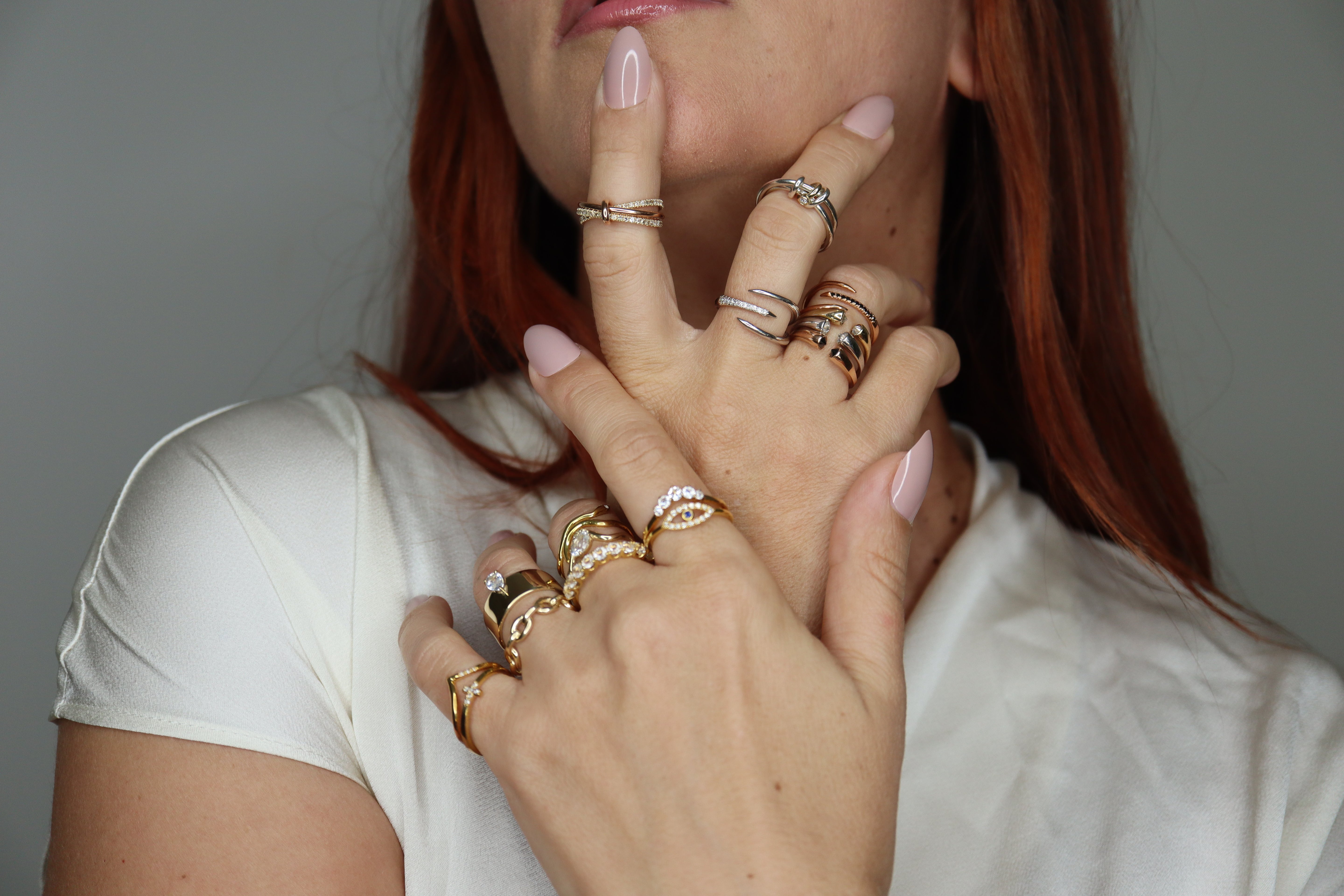




Is 14K Gold a Good Investment? Jewelry Value Explained
14k gold can be a good investment if you want jewelry that holds material value, lasts for decades, and can be worn every day. It is not the same as buying gold bullion, coins, or a financial asset, but solid 14k gold jewelry has real gold content, resale value, and heirloom potential that plated, filled, and vermeil jewelry do not offer.
This article is for jewelry education, not financial advice. If your primary goal is financial return, compare jewelry with bullion, coins, or other gold investment options before buying.
A solid 14k gold ring contains 58.3% pure gold by weight, which gives it an intrinsic value floor based on the current gold market price. The finished piece may also carry value from craftsmanship, design, gemstones, rarity, condition, and emotional meaning.
For shoppers comparing 14k gold rings, the investment question is not only “Will this increase in price?” A better question is whether the piece gives you lasting wear, real gold content, resale potential, and long-term personal value compared with jewelry that wears out or loses its finish.
You will learn how 14k gold value works, how resale and melt value are calculated, why solid gold differs from plated jewelry, and when 14k gold is worth buying.
Quick Verdict: Is 14k Gold Jewelry Worth Buying?
14k gold jewelry is worth buying when you want a piece that combines real gold content, daily-wear durability, and long-term personal value. It is not the most efficient way to invest in gold for profit, but it is a strong choice if you want jewelry you can wear, keep, resell, or pass down.
| Investment factor | 14k gold jewelry |
|---|---|
| Pure gold content | 58.3% pure gold by weight |
| Resale value | Yes, based partly on gold weight, condition, design, and buyer demand |
| Daily wear durability | Strong, especially for rings and jewelry worn often |
| Compared with plated jewelry | Much stronger value because solid 14k gold contains gold throughout the piece |
| Compared with gold bullion | Less efficient for pure financial return, but more wearable and personal |
| Best use case | Wearable value, long-term ownership, daily jewelry, and heirloom pieces |
The simplest way to think about it is this: solid 14k gold jewelry is not a shortcut to quick profit, but it is far more value-retentive than disposable fashion jewelry. You get a piece made with real gold, strong enough for everyday wear, and valuable enough to keep meaning beyond the original purchase.
What Makes 14k Gold Valuable?
14k gold is valuable because it is real gold alloyed for strength. The “14k” mark means the metal is 58.3% pure gold by weight, with the remaining 41.7% made from strengthening metals such as copper, silver, zinc, or other alloy metals depending on the gold color.
That balance is what makes 14k gold especially practical for jewelry. It contains enough pure gold to hold meaningful material value, but it is stronger than higher-karat gold that can bend or scratch more easily. For rings, that durability matters because the piece touches surfaces, absorbs impact, and is exposed to daily wear more than earrings or necklaces.
Solid 14k gold is also different from gold-plated, gold-filled, or vermeil jewelry because the gold runs throughout the piece. If a solid 14k gold ring is scratched, polished, resized, or worn for years, it is still 14k gold beneath the surface. That is a major reason it can hold value over time.
Value comes from more than the gold content alone. A finished 14k gold ring may also include craftsmanship, design complexity, gemstones, finishing quality, and brand or atelier reputation. The gold creates the material foundation, while the finished piece adds wearable and artistic value on top of that foundation.
How Much Is 14k Gold Worth Per Gram?
The value of 14k gold per gram depends on the current market price of pure gold. Since 14k gold is 58.3% pure gold, one gram of 14k gold contains about 0.583 grams of pure gold. That means its raw gold value is lower than 24k gold, but still tied directly to the gold market.
14k gold value formula: current pure gold price per gram × 0.583 = approximate 14k gold value per gram.
For a finished 14k gold ring, the same logic applies. Multiply the ring’s total weight by 0.583 to estimate how many grams of pure gold it contains. Then multiply that number by the current gold spot price per gram to estimate the ring’s approximate melt value.
14k ring melt value formula: ring weight in grams × 0.583 × current pure gold price per gram = approximate raw gold value.
This number is useful, but it is not the same as the full value of the finished ring. A buyer, pawn shop, or gold dealer may account for refining costs, resale margins, condition, and current demand. A finished piece may also be worth more than melt value when its craftsmanship, design, gemstones, or brand reputation matter to the buyer.
If you want to understand how ring weight affects value, read more about how gold ring weight affects value.
Does 14k Gold Hold Value Over Time?
Yes, 14k gold can hold value over time because it contains real gold throughout the piece. The gold content gives the jewelry an intrinsic material value that does not disappear with wear, age, or changing trends.
The value of 14k gold is connected to the gold market, so its melt value can rise or fall as gold prices change. That means a solid 14k gold ring may be worth more or less at different points in time based on the current gold spot price, the ring’s weight, and the amount of pure gold inside it.
That said, jewelry resale value is not the same as retail price. A finished ring includes design, craftsmanship, gemstones, retail margin, and labor, so you should not expect to resell it immediately for the same amount you paid. The stronger case for 14k gold jewelry is long-term retained value: it remains wearable, repairable, resellable, and materially valuable in a way that plated or disposable jewelry usually does not.
This is why solid gold jewelry is best viewed as a long-term ownership purchase rather than a short-term profit strategy. It gives you something you can wear and enjoy while still retaining a real gold value beneath the design.
Does 14k Gold Have Resale Value?
Yes, solid 14k gold has resale value because it contains real gold throughout the piece. If you sell a 14k gold ring, part of its value comes from the weight of the gold, the current gold market price, and the fact that 14k gold is 58.3% pure gold.
Resale value is not always the same as the original retail price. A gold buyer or pawn shop may focus mainly on melt value, which is the raw value of the gold content. A private buyer, collector, or jewelry customer may also consider the ring’s design, condition, gemstones, craftsmanship, and maker.
That difference matters. A plain 14k gold band may be valued mostly by weight, while a finished designer ring may carry value beyond the metal itself. Documentation, condition, stone quality, and recognizable design details can all affect how much someone is willing to pay for the finished piece.
Solid gold also has a resale advantage over plated, filled, or vermeil jewelry. Those pieces may look gold on the surface, but they contain far less gold by weight. A solid 14k gold ring remains gold beneath the surface, even after years of wear, polishing, or resizing.
If you are buying with long-term ownership in mind, choose a piece you would be happy to wear for years rather than one you expect to resell quickly. A solid gold ring can retain material value, but its best return is often the combination of daily use, lasting beauty, and resale potential.
14k Gold Jewelry vs Gold Bullion
14k gold jewelry and gold bullion serve different purposes. Bullion, coins, and gold funds are usually better if your main goal is direct exposure to the price of gold. They are priced closer to the raw metal value and are easier to compare by weight and purity.
Jewelry includes more than gold content. A finished 14k gold ring also reflects design, labor, craftsmanship, finishing, gemstones, and retail costs. That means the purchase price will usually be higher than the melt value of the gold alone.
This does not make solid gold jewelry a poor choice. It simply means the value is different. Bullion is mainly financial. Jewelry is wearable, personal, and functional while still containing real gold. You can enjoy it every day, keep it for decades, resell it if needed, or pass it down as an heirloom.
If your only goal is to track the gold market as closely as possible, bullion is usually the more efficient choice. If you want something beautiful, durable, and meaningful that still retains material value, solid 14k gold jewelry can make more sense.
14k Gold vs Plated, Filled, and Vermeil Jewelry
Solid 14k gold is different from plated, filled, and vermeil jewelry because the gold runs throughout the entire piece. A solid 14k gold ring is not just gold on the surface. It contains 58.3% pure gold by weight from the outside of the ring to the inside.
Gold-plated jewelry has only a thin layer of gold over a base metal. Gold vermeil uses a thicker layer of gold over sterling silver. Gold-filled jewelry contains more gold than standard plating, but it is still a layered material rather than solid gold throughout.
This difference matters for long-term value. A solid 14k gold ring has melt value because it contains grams of real gold. A plated ring may look similar when new, but its gold layer is too thin to give it meaningful resale or melt value. Once the surface wears away, the piece usually has little material worth.
Solid 14k gold can also be polished, resized, repaired, and worn for decades without losing its identity as gold jewelry. That makes it a stronger choice for long-term ownership than jewelry with a temporary gold surface.
For a full material breakdown, read more about solid gold vs plated, vermeil, and gold-filled jewelry.
Why a Finished Ring Is Worth More Than Its Melt Value
Melt value is only the raw value of the gold inside a ring. It does not account for the design, labor, stone setting, polishing, finishing, movement engineering, or skill required to turn raw metal into a finished piece of jewelry.
This is especially important with handcrafted rings. A simple gold band may be easier to value by weight, but a more detailed ring carries additional value through the work required to make it wearable, balanced, comfortable, and beautiful. The finished piece is not just gold by weight. It is gold shaped by design and craftsmanship.
For kinetic rings, that added craftsmanship matters even more. Moving links, interlocking bands, and articulated details require precise fitting so the ring moves smoothly without pinching, catching, or feeling unstable. That work is not reflected in melt value, but it is part of what makes the finished ring worth more than the raw gold alone.
This is why two 14k gold rings with the same gram weight can have very different values. One may be a plain band priced mostly around material and labor. Another may include gemstones, handmade details, complex movement, or a distinctive design that gives it more finished value.
To understand how craftsmanship affects long-term jewelry value, read more about handmade vs mass-produced jewelry.
Why 14k Gold Works Well for Heirloom Jewelry
14k gold works well for heirloom jewelry because it balances real gold content with everyday durability. It contains enough pure gold to hold material value, while the alloy metals make it strong enough for years of regular wear.
That strength matters for rings. A ring is exposed to more contact than most jewelry because it moves with your hands throughout the day. Solid 14k gold can be cleaned, polished, repaired, and resized over time, which helps the piece remain wearable instead of becoming fragile or unusable.
Unlike plated jewelry, solid 14k gold does not rely on a temporary surface layer. The gold is present throughout the piece, so normal wear does not remove its identity as gold jewelry. With proper care, a 14k gold ring can remain beautiful, functional, and valuable for decades.
Heirloom value is not only about resale. It is also about memory, ownership, and continuity. A solid gold ring can carry the story of who wore it, why it was chosen, and when it was passed on. That emotional value can grow long after the original purchase price is forgotten.
To understand what makes a piece worth passing down, read more about what makes jewelry heirloom-worthy.
Cost-Per-Wear: Solid 14k Gold vs Disposable Jewelry
The upfront price of solid 14k gold jewelry is usually higher than plated or fashion jewelry, but the long-term cost can be very different. A low-cost plated ring may feel inexpensive at first, but if the finish wears away and the piece needs to be replaced, the cost repeats again and again.
A solid 14k gold ring is designed for long-term wear. It can be cleaned, polished, repaired, and resized, and it still contains real gold years after purchase. That means the cost can be spread across thousands of wears rather than a few months of use.
For example, a plated ring that costs less upfront but needs to be replaced every year may not be as economical over time as one solid gold ring worn for decades. The solid gold ring also retains material value, while the replaced plated pieces usually do not.
This is where 14k gold can make practical sense. You are not only paying for how the ring looks on the day you buy it. You are paying for durability, real gold content, repairability, and a piece that can continue to hold value over years of wear.
If you are comparing budget, value, and longevity, read more about how much to spend on a gold ring.
When 14k Gold Is Not a Good Investment
14k gold jewelry is not the best investment if your only goal is financial return. If you want direct exposure to the price of gold, bullion, coins, or gold funds are usually more efficient because they are priced closer to raw metal value.
Jewelry includes design, labor, finishing, gemstones, retail costs, and craftsmanship. Those elements make the piece wearable and meaningful, but they also mean the purchase price is higher than the melt value of the gold alone.
14k gold may not be the right choice if you expect to resell quickly for a profit, want the smallest possible gap between buying and selling price, or do not care about wearing or keeping the piece. In those cases, jewelry is usually not the most efficient gold-buying format.
The stronger reason to buy 14k gold jewelry is long-term ownership. It makes sense when you want a piece you can wear often, repair if needed, keep for years, and eventually resell or pass down while still retaining real material value.
Why 14k Is Practical Compared With 18k and 24k Gold
14k gold is often the most practical choice for investment-minded jewelry because it balances gold content with strength. It contains 58.3% pure gold, which gives it real material value, while the alloy metals make it durable enough for regular wear.
18k gold contains more pure gold than 14k gold, so its melt value per gram is higher. But it is also softer and usually more expensive. For jewelry that is worn often, especially rings, that added softness can make the piece more vulnerable to scratches, dents, or bending over time.
24k gold has the highest gold content, but it is usually too soft for everyday rings. It can be beautiful for certain jewelry types, but a ring needs to withstand pressure, contact, and daily movement. A piece that is too soft may hold more gold by purity, but it may not hold its shape or finish as well through years of wear.
That is where 14k gold performs especially well. It gives you meaningful gold content, strong daily-wear durability, and a lower entry price than higher-karat gold. For rings, that combination can make 14k the better long-term choice for people who want jewelry they can actually wear, not just store.
For a deeper comparison of purity, color, durability, and value, read more about 14k vs 18k vs 24k gold rings.
Frequently Asked Questions About 14k Gold as an Investment
Is 14k gold a good investment?
14k gold can be a good investment if you want jewelry with lasting material value, daily-wear durability, and resale potential. It is not the same as buying bullion, but solid 14k gold holds value better than plated or fashion jewelry.
Does 14k gold hold value?
Yes. Solid 14k gold holds value because it contains 58.3% pure gold by weight. Its melt value changes with the gold market, while the finished jewelry value also depends on design, condition, craftsmanship, and buyer demand.
Does 14k gold have resale value?
Yes. Solid 14k gold jewelry can usually be resold because it contains real gold. The resale amount depends on gold weight, current gold price, condition, design, gemstones, and whether the buyer values the finished piece or only the scrap gold.
How much is 14k gold worth per gram?
To estimate 14k gold value per gram, multiply the current pure gold spot price per gram by 0.583. This estimates the gold content value before buyer fees, resale margins, or craftsmanship value.
Is 14k gold worth buying?
14k gold is worth buying if you want jewelry that is durable, wearable, and made with real gold throughout the piece. It is especially practical for rings because it balances gold content with strength.
Is 14k gold better than 18k gold for investment jewelry?
18k gold contains more pure gold per gram, but 14k gold is usually more durable for everyday wear. For rings and daily jewelry, 14k can be the more practical long-term choice.
Is gold jewelry better than gold bullion?
Gold bullion is usually better for pure financial exposure to gold. Gold jewelry is better when you want something wearable, meaningful, and long-lasting that still retains material value.
Is plated jewelry a good investment?
Plated jewelry is usually not a good investment because it contains only a thin surface layer of gold. Once that layer wears away, the piece has little to no intrinsic gold value.
Can 14k gold jewelry be passed down?
Yes. Solid 14k gold jewelry can last for decades when cared for properly, making it suitable for heirloom pieces. It can often be cleaned, repaired, resized, and passed down.
Choosing 14k Gold for Long-Term Value
The best reason to buy 14k gold jewelry is not short-term profit. It is long-term ownership. Solid 14k gold gives you real gold content, everyday durability, resale potential, and a piece you can continue wearing for years.
When comparing jewelry, look beyond the surface finish. A solid 14k gold ring contains gold throughout the piece, can be repaired or resized, and holds material value in a way that plated or disposable jewelry usually cannot.
Explore Antoanetta’s 14k gold rings, gold rings to buy yourself, and fine jewelry under $2,000 to compare solid gold pieces made for lasting wear.