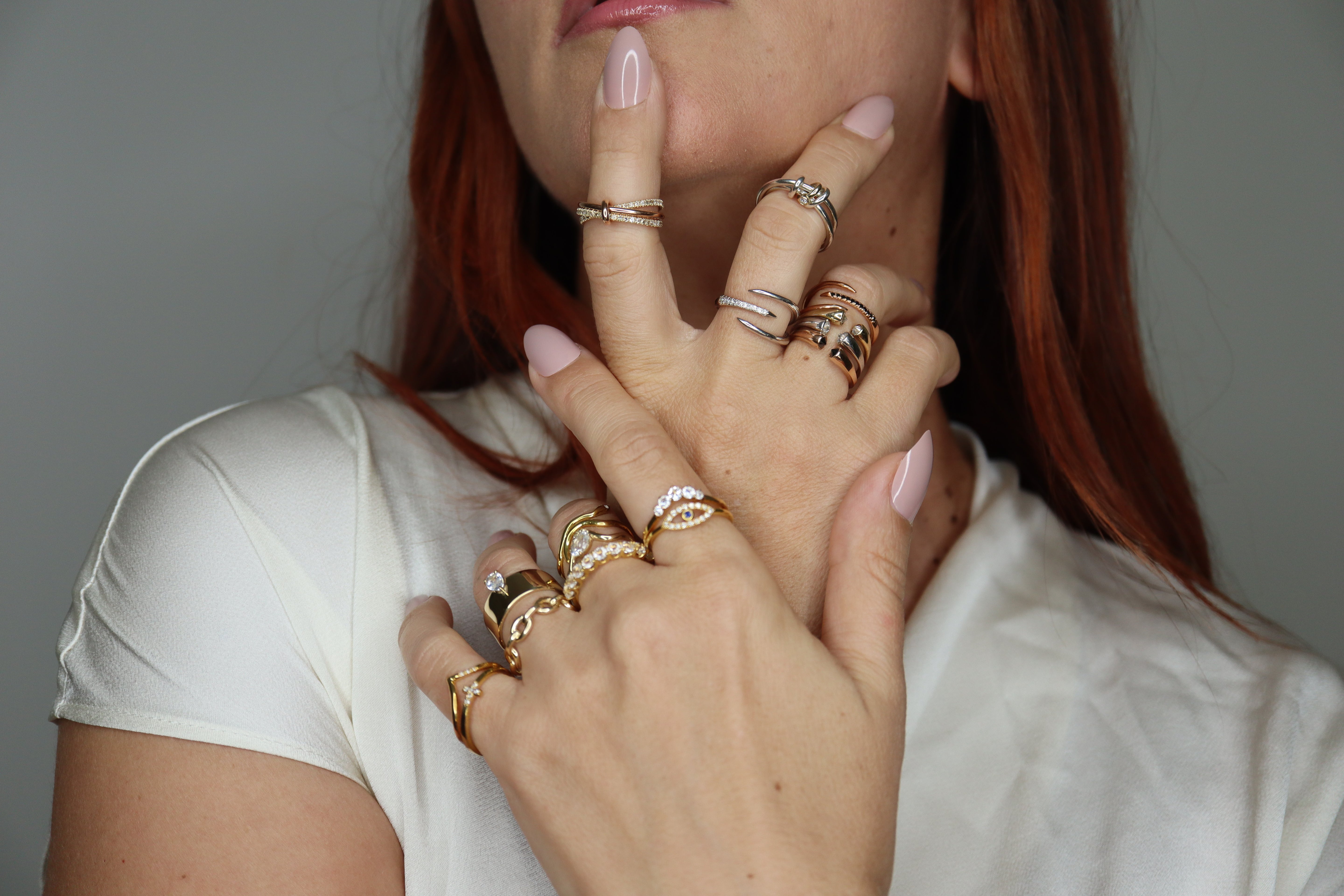





Engagement Rings for Active Lifestyles: Settings, Gemstone Durability, and What Handles Daily Wear
Which Engagement Ring Styles Work Best for Active Lifestyles?
The best engagement ring styles for active lifestyles are low-profile settings (bezel, channel, or flush) that minimize catching, comfort-fit bands that accommodate finger swelling during exercise, and solid 14k gold construction that handles water, sweat, and daily physical use without degradation. If you work out daily, hike on weekends, garden with bare hands, or do anything that puts your hands through real physical use, you need an engagement ring designed for how you actually live, not for how you look standing still in a photograph.
The good news is that solid 14k gold is inherently tough. The question is not whether gold can handle your lifestyle. It can. The question is which design elements make a ring more or less practical for active daily wear.
Why Does Setting Style Matter Most for Active Ring Wearers?
The most common complaint from active women wearing engagement rings is catching, snagging, or worrying about impact damage. These problems are almost entirely setting-dependent, not stone-dependent or metal-dependent.
Prong settings are the most common engagement ring style. Metal claws grip the stone from multiple points, raising it above the band. This elevation exposes the stone to side impact and gives the prongs opportunities to catch on fabrics, gloves, and equipment. For very active lifestyles, traditional prong settings require the most vigilance.
Bezel settings enclose the stone in a continuous metal rim that sits flush or nearly flush with the band surface. This dramatically reduces catching risk and protects the stone from side impacts. If you regularly grip barbells, handlebars, climbing holds, or tools, a bezel setting eliminates most of the practical concerns associated with engagement ring wear during physical activity.
Channel settings embed stones into a groove in the band itself, with metal walls on both sides protecting the stones from lateral contact. This is common in eternity bands and accent stone rows.
Flush settings sink the stone into the band surface so it sits level with the surrounding metal. This is the lowest-profile option and the most practical for truly hands-on lifestyles, though it limits the stone's light performance because less of the stone is exposed to light entry.
How Do Band Width and Profile Affect Comfort During Physical Activity?
Narrower bands flex more under pressure, which can be uncomfortable during gripping activities. A slightly wider band (3mm to 5mm) distributes pressure more evenly across your finger and feels more stable during physical activity. Wider bands also resist deformation better than very thin bands, which matters if you regularly grip hard objects.
A comfort-fit profile, where the inside of the band is slightly domed rather than flat, reduces friction during the swelling that naturally occurs during exercise. Your fingers expand when your blood is pumping, and a comfort-fit band accommodates this expansion more gracefully than a straight-walled band. The comfort fit guide explains the difference in detail.
Are Kinetic Rings Good for Active Lifestyles?
At first glance, you might assume a kinetic ring with moving parts would be less suitable for active wear than a solid band. The opposite is true. Kinetic rings are designed specifically for continuous movement, which is exactly what an active lifestyle provides.
The articulated links in a ring like the Alizée flex with your finger rather than resisting it. When you grip a barbell or a steering wheel, the links conform to the pressure rather than fighting it. This flexibility actually makes kinetic rings more comfortable during gripping activities than rigid wide bands.
Rolling band rings like the Aria distribute pressure across multiple independent bands rather than concentrating it on a single rigid surface. The bands shift and rotate under pressure, creating a dynamic fit that adapts to your hand's changing shape throughout physical activity.
The kinetic ring comfort guide covers the daily wearing experience in detail, including gym, sleep, and water exposure.
Which Gemstones Are Durable Enough for Active Engagement Ring Wear?
If your engagement ring includes a gemstone, its hardness determines how much caution you need during physical activity. Here is the practical hierarchy:
Diamond (10/10 Mohs): Nothing will scratch it. The most worry-free stone for any activity level. Your only concern is the setting, not the stone.
Moissanite (9.25/10 Mohs): Nearly as hard as diamond. Effectively worry-free for all activities.
Ruby and Sapphire (9/10 Mohs): Extremely durable. Can handle anything short of direct contact with diamond. Excellent for active lifestyles without reservation.
Morganite and Aquamarine (7.5-8/10 Mohs): Durable for most daily activities. Remove for heavy lifting where the stone might contact rough metal surfaces, contact sports, or abrasive manual work. Fine for yoga, running, cycling, swimming, and general fitness.
Smoky Quartz (7/10 Mohs): Adequate for moderate activity. Remove for anything involving impact risk or abrasive contact. Best for women whose "active" means yoga and hiking rather than CrossFit and construction.
The gemstone guide covers durability for every stone in the collection.
Can Solid Gold Rings Handle Water, Sweat, and Chemical Exposure?
Solid 14k gold handles water and sweat without any degradation. You can shower, swim, sweat through a workout, and wash your hands thousands of times without affecting the gold. This is a fundamental advantage of solid gold over plated alternatives, which deteriorate rapidly under moisture exposure.
The one caution: chlorine (pools and hot tubs) and harsh chemicals can affect the alloy metals in gold over time, potentially weakening the metal with prolonged, repeated exposure. Occasional swimming is fine. Daily chlorinated pool training is worth removing the ring for, or at minimum rinsing the ring thoroughly afterward.
Gemstones are generally unaffected by water and sweat, though it is good practice to rinse your ring after saltwater or chlorine exposure to prevent residue buildup in settings and around stones. The everyday wear guide covers exposure scenarios in detail.
What Practical Tips Help Active Women Care for Their Engagement Rings?
Get sized correctly: Your ring should be snug enough that it does not slide off during activity but loose enough that it does not constrict when your fingers swell during exercise. Measure at the end of a workout day for the most accurate active-lifestyle fit. The sizing guide provides multiple measurement methods.
Keep it clean: Sweat, lotion, and chalk buildup in settings and around stones is normal. A weekly warm water and mild soap soak keeps everything sparkling. Takes two minutes.
Annual check-up: Have a jeweler inspect your ring once a year, particularly the stone settings. Active wear means more micro-impacts over time, and catching a slightly loosened prong early prevents stone loss.
Frequently Asked Questions About Engagement Rings for Active Lifestyles
Should I take my ring off at the gym?
With a bezel-set or kinetic ring in solid 14k gold, most gym activities are fine. The exceptions would be heavy deadlifts where a rigid ring creates pressure points, and any exercise where the ring could catch on equipment. Listen to your comfort level. Many women wear their solid gold rings through every workout without issue.
Can I wear my engagement ring rock climbing?
Most climbers remove all rings while climbing because any ring, regardless of design, can create a dangerous pressure point if your finger swells or the ring catches on a hold. This is a safety recommendation, not a material concern.
Will working out damage the ring's finish?
Solid 14k gold develops a natural patina over time that many people find more beautiful than the original high polish. Regular wear, including exercise, contributes to this patina. If you prefer a bright polish, a quick professional buff restores it completely. Neither patina nor polishing affects the ring's structural integrity.