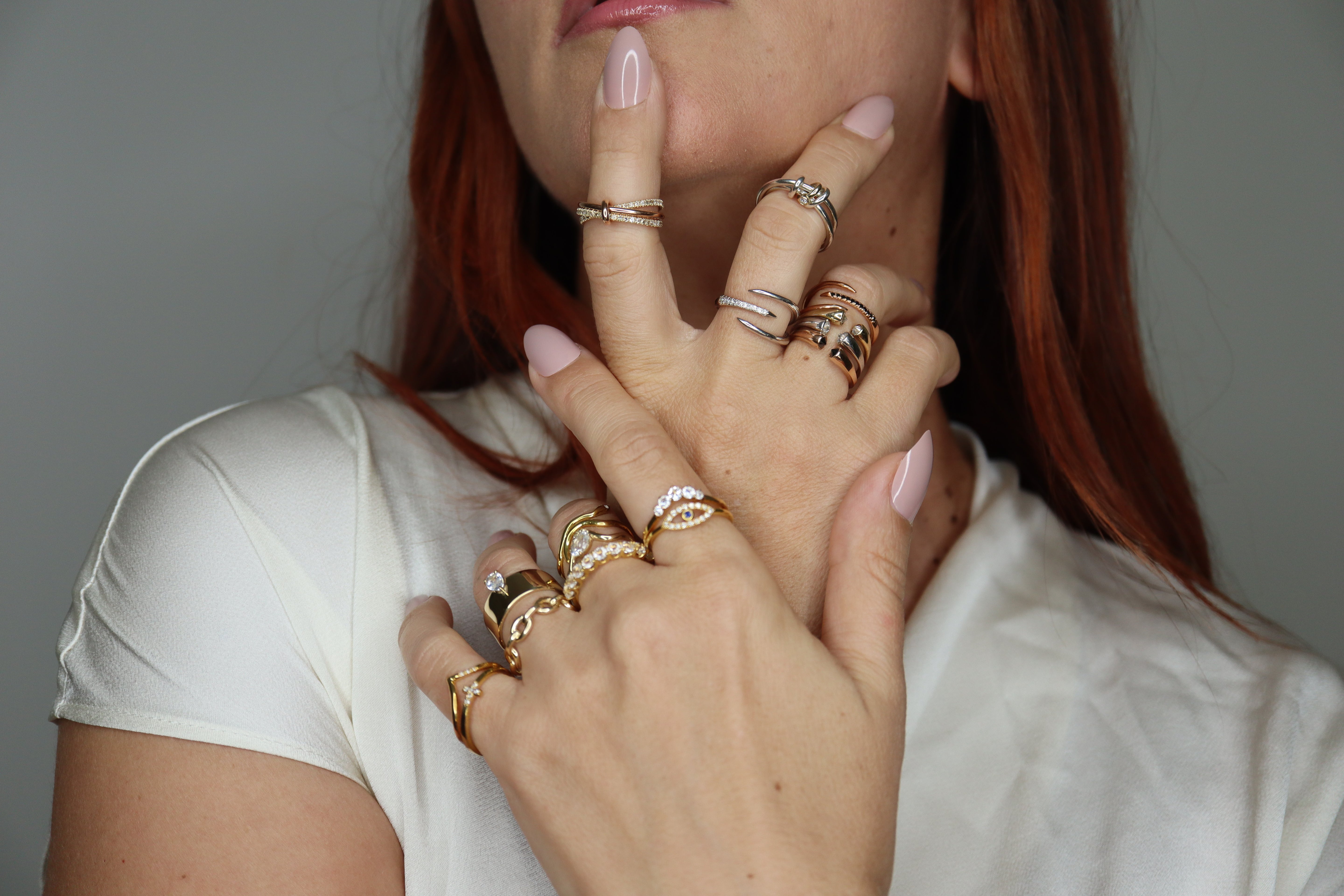





Yellow Gold vs. White Gold vs. Rose Gold: How to Choose Your Metal Color
To choose your gold metal color, consider how each option pairs with your skin tone, your wardrobe, your existing jewelry, and the overall mood you want the piece to create. Yellow, white, and rose gold are all solid 14k gold - the same 58.3% pure gold content, the same durability, the same permanence. The difference is entirely in the alloy metals mixed with the gold, which shift the color from warm yellow to cool silver-white to soft blush pink.

There is no wrong answer. Each color has strengths that suit different aesthetics, skin tones, and lifestyles. This guide walks through the practical differences so your choice is informed rather than guesswork.
What Does Yellow Gold Look Like and Who Does It Suit?
Yellow gold is the closest to gold's natural color. The 14k alloy uses copper and silver in balanced proportions that preserve the warm, classic yellow tone that has represented wealth, beauty, and permanence for thousands of years.
Skin tone pairing: Yellow gold is the most universally flattering gold color. It complements warm skin tones (golden, olive, or peachy undertones) particularly well, creating a harmonious warmth. On cool skin tones, yellow gold provides a striking contrast that draws attention to the hand. On neutral skin tones, it reads as classic and balanced.
Wardrobe compatibility: Yellow gold pairs naturally with earth tones, blacks, navies, creams, and warm colors. It reads as both casual and formal depending on the design. A minimalist yellow gold band works at the gym; a gemstone-set yellow gold kinetic ring works at a gala.
Maintenance: Zero. Yellow gold's color comes entirely from the alloy composition. There is no surface treatment to maintain, re-apply, or refresh. The color is permanent from the day of casting to the day you pass it to the next generation.
In kinetic designs: Yellow gold links and bands catch warm-spectrum light beautifully as they move. The Alizée in yellow gold shows how individual links reflect warm golden tones from shifting angles. The Marque uses yellow gold's natural warmth to create a grounding, substantial presence on the finger.

What Does White Gold Look Like and Who Does It Suit?
White gold uses palladium, nickel-free alloy metals, and/or silver to lighten the alloy's natural color, then receives a rhodium plating to achieve its bright, silvery-white finish. The result is a metal that looks similar to platinum at a fraction of the cost while retaining all the benefits of solid 14k gold.
Skin tone pairing: White gold flatters cool skin tones (pink, red, or blue undertones) most naturally, creating a sleek, contemporary look. On warm skin tones, it provides a dramatic contrast. On neutral skin tones, it reads as modern and refined.
Wardrobe compatibility: White gold pairs best with cool-toned wardrobes - greys, blues, purples, silvers, blacks. It reads as inherently modern and sleek, making it a natural fit for contemporary and minimalist aesthetics. It also works seamlessly in professional settings where a more understated metal tone is preferred.

Maintenance: White gold requires occasional rhodium re-plating. The rhodium layer that gives white gold its bright silver-white appearance gradually wears under daily use, revealing the slightly warmer tone of the underlying white gold alloy. This process takes one to three years depending on wear intensity. Re-plating is quick (usually same-day at a jeweler) and inexpensive - a routine maintenance step rather than a repair.
Diamond advantage: White gold is the preferred metal for diamond-set designs because its neutral color does not reflect warmth into the stones. Diamonds appear brighter and more colorless in white gold settings. The Vortexa uses white gold elements alongside yellow gold, allowing its pavé diamonds to pop against the cool metal while the warm gold provides contrast.
What Does Rose Gold Look Like and Who Does It Suit?
Rose gold achieves its warm pink blush by increasing the copper ratio in the 14k alloy. The copper gives the metal its distinctive pinkish tone while maintaining the same 58.3% gold content as yellow and white gold. Rose gold has surged in popularity over the past decade and has become Antoanetta's signature metal for ruby and pink sapphire designs.
Skin tone pairing: Rose gold is arguably the most universally complementary gold color. Its warm-but-soft pink tone flatters warm, cool, and neutral skin tones almost equally. On warm skin, it harmonizes without overwhelming. On cool skin, it provides a gentle warmth that reads as romantic rather than jarring. This universality is a significant advantage if you are unsure which gold color suits you.

Wardrobe compatibility: Rose gold pairs with an exceptionally wide range - blush and pink tones (obvious harmony), blacks (dramatic contrast), whites and creams (soft elegance), and even denim and earth tones (relaxed warmth). It is slightly less formal than yellow gold in traditional settings but increasingly accepted across all contexts.
Maintenance: Like yellow gold, rose gold's color is inherent to the alloy - no surface treatment required. The pink tone is permanent and does not require replating or refreshing. Some rose gold develops a very slightly richer warm tone over years of wear as the copper in the alloy subtly patinas at a microscopic level, but most wearers consider this a feature rather than a flaw.
Gemstone synergy: Rose gold is the natural companion for warm-colored gemstones. Rubies in rose gold - as in the Seraphina and Fiamma - create a warm, cohesive palette. Pink sapphires in rose gold - as in the Kyra and Lyra - produce an almost monochromatic softness. Morganite in rose gold is the classic pastel pairing for engagement rings.
Why Choose Mixed Metal Jewelry Instead of a Single Gold Color?
The traditional rule - match all your metals - has given way to a more expressive approach. Mixed metal jewelry intentionally combines two or three gold colors in a single piece, creating visual complexity and eliminating the need to coordinate your ring with every other piece you wear.
Kinetic rings are particularly compelling in mixed metals because the movement continuously rearranges the color pattern. The Aria uses all three gold tones - yellow, white, and rose - in its rolling bands. As the bands rotate, different colors cycle to the top of the finger. The ring never presents the same color arrangement twice. The Elysium pairs two gold tones in connected parallel bands with diamond accents, creating a subtle two-tone effect that shifts as the bands move independently.

Mixed metal designs also solve the practical problem of jewelry coordination. If your ring already contains yellow, white, and rose gold, it matches everything else you own - gold watches, silver bracelets, rose gold earrings. Nothing clashes because the ring already includes all the tones. Read the complete mixed metal styling guide for more on wearing multi-tone jewelry with confidence.
Quick Guide to Choosing Your Gold Color
You love classic warmth and zero maintenance → Yellow gold
You prefer cool, modern, sleek jewelry → White gold
You want the most universally flattering option → Rose gold
You cannot decide or want maximum versatility → Mixed metal
You are buying a diamond ring and want maximum sparkle → White gold
You are buying a ruby or pink sapphire ring → Rose gold
You already wear silver watches or platinum jewelry → White gold or mixed metal
You already wear gold watches or yellow gold jewelry → Yellow gold or mixed metal
Read the beginner's guide if you are selecting your first kinetic ring and want a complete decision framework including gold color, movement type, and budget.
Frequently Asked Questions About Yellow Gold, White Gold, and Rose Gold
Can I change the gold color of a ring after purchase?
The gold color is determined by the alloy composition during casting and is permanent. A yellow gold ring cannot be converted to rose gold or white gold. However, yellow gold can be rhodium-plated to achieve a white gold appearance - this is not a color change but a surface coating. To get a different color, select the desired gold option when ordering.
Does rose gold fade over time?
No. Rose gold's color is inherent to the copper content in the alloy and is permanent. It may develop a very subtle deepening of warmth over decades, but it does not fade, lighten, or lose its pink tone.
Is one gold color more expensive than the others?
The gold content is identical across all three colors (58.3% in 14k), so the base material cost is the same. Minor price differences may exist due to specific alloy metals used or gemstone color-matching requirements, but these differences are negligible in most designs.
Can I stack rings in different gold colors?
Yes - and it is one of the most popular styling approaches. Mixing yellow, white, and rose gold across stacked rings creates a layered, dimensional look. The ring stacking guide covers metal mixing strategies in detail.