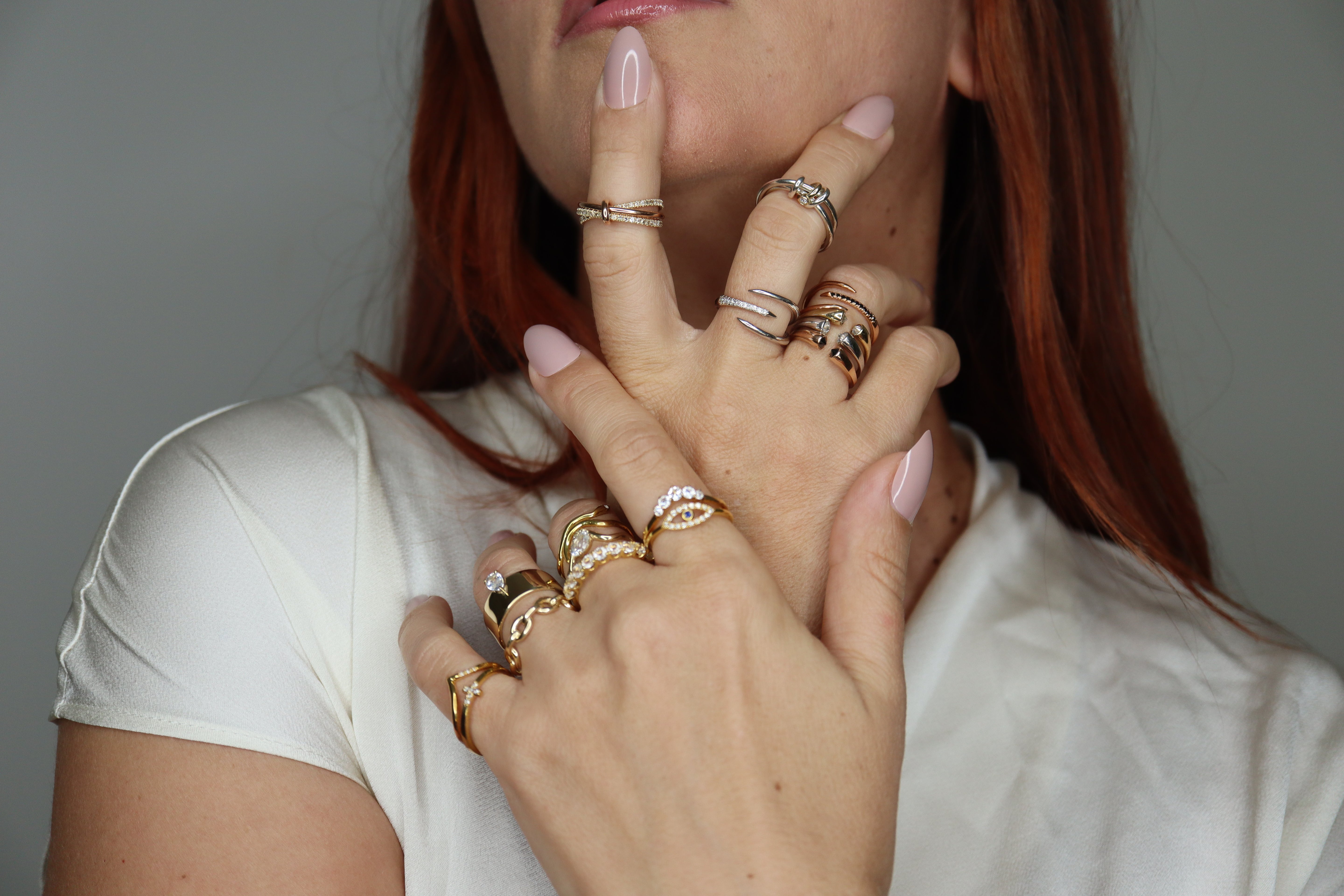





Will 14K Gold Tarnish, Fade, or Turn My Finger Green?
No, solid 14k gold does not tarnish, fade, or turn your finger green. These are properties of plated, filled, or base metal jewelry - not solid gold. If you have experienced any of these problems with jewelry in the past, the piece was not solid gold regardless of what the seller claimed. Understanding why solid gold behaves differently from everything else eliminates the most common anxiety people carry into a fine jewelry purchase.
Why Does Gold Not Tarnish?
Tarnishing is a chemical reaction between a metal's surface and compounds in the environment - typically sulfur or oxygen. Silver tarnishes because it reacts with airborne sulfur compounds to form a dark silver sulfide layer. Copper tarnishes because it oxidizes in humid air, eventually producing the green patina visible on old copper roofing and the Statue of Liberty.
Gold resists these reactions because of its position on the periodic table. It is a noble metal - chemically inert under virtually all conditions encountered in daily life. Gold does not react with oxygen, sulfur, water, or the vast majority of household chemicals. This is not a matter of degree or quality - it is a fundamental property of the element. Gold excavated from ancient tombs thousands of years old retains its original color and luster because the metal simply does not react with its environment.
In 14k solid gold, the alloy metals (copper, silver, zinc) are protected by the gold matrix that surrounds them within the alloy. While copper and silver can tarnish as pure metals, they are dispersed within the gold alloy at a molecular level and do not present exposed surfaces large enough to undergo significant oxidation. The result is a material that behaves, for all practical purposes, as tarnish-proof.
Does Solid 14K Gold Cause Green Finger Discoloration?
The green discoloration that some people experience from wearing rings is caused by copper oxidation - specifically, copper in direct contact with skin in the presence of moisture and acids (from sweat, lotions, or cleaning products). This reaction is impossible with solid 14k gold under normal circumstances because the copper in the alloy is locked within the gold matrix and does not directly contact your skin as free copper.
Green fingers happen with one specific type of jewelry: plated or filled pieces where the gold coating has worn through, exposing the brass or copper base metal beneath. Once that base metal touches your skin, the copper reacts with moisture and sweat to produce copper chloride - a green compound that transfers to your finger. The green residue is not dangerous, but it is a clear signal that the plating has failed and the jewelry is no longer functioning as gold.
If you are wearing solid 14k gold and notice a greenish tone, the cause is external rather than the ring itself - typically a reaction between your skin chemistry and a topical product (certain hand creams, cleaning chemicals, or chlorinated pool water). This discoloration appears on the skin, not on the gold, and washes off easily. The gold itself remains unaffected.
Can You Wear 14K Gold in the Shower, Pool, and Ocean?
Solid 14k gold handles water exposure without any degradation. You can shower, swim, soak in a hot tub, and wade in the ocean while wearing your gold ring. The metal will not tarnish, corrode, discolor, or weaken from water contact.
Tap water and shower: No effect whatsoever. Soap and shampoo do not react with gold. The ring can be worn during every shower for the rest of your life without any change to its appearance or structure.
Chlorinated pool water: Chlorine in swimming pool concentrations does not damage solid 14k gold. This is a frequent concern, but the chlorine levels in pools are far too low to affect gold. (Concentrated industrial chlorine - aqua regia - can dissolve gold, but this is a laboratory reagent, not something encountered in daily life.)
Salt water / ocean: Salt water does not damage solid gold. Gold has been recovered from centuries-old shipwrecks on the ocean floor in pristine condition. Your beach vacation will not affect your ring.
Hot springs and mineral water: Some natural hot springs contain elevated sulfur levels. While this would tarnish silver immediately, solid 14k gold resists sulfur compounds. Mild surface dulling is theoretically possible in extremely sulfur-rich environments, but it would polish off instantly and does not represent actual material damage.
The one consideration with water exposure is gemstones and settings, not the gold itself. Soap residue can temporarily accumulate behind pavé-set diamonds, reducing sparkle until cleaned. A brief soak in warm water with gentle agitation restores full brilliance. Browse the 14k gold ring collection - every piece is built for 24/7 wear including water exposure.
Does Sweat, Lotion, or Perfume Damage 14K Gold?
Sweat is mildly acidic (pH around 4.5-5.5) and contains salts and trace minerals. On silver or plated jewelry, sweat accelerates tarnishing and corrosion. On solid 14k gold, sweat has no effect. You can wear your ring during intense exercise, in summer heat, and through any level of perspiration without concern for the gold's appearance or integrity.
Hand lotions, moisturizers, and perfume also do not damage solid gold. However, residues from these products can build up on the ring's surface and between gemstone settings, temporarily dulling the finish. This is not tarnish - it is surface residue that washes off with warm water and mild soap. If your ring looks slightly less brilliant after weeks of lotion application, a quick cleaning restores it to its original sparkle.
The practical takeaway: you do not need to remove your solid 14k gold ring for any routine personal care activity. Apply lotion with the ring on. Spray perfume. Wash your hands throughout the day. The gold is chemically resistant to all of it.
Does White Gold or Rose Gold Tarnish Differently Than Yellow Gold?
Yellow gold has no surface treatment - its color comes entirely from the alloy composition. There is nothing to wear off, re-apply, or maintain. The color is permanent and will not change under any normal conditions.
White gold has one caveat: the bright silvery-white appearance is achieved through rhodium plating - a thin layer of rhodium (a platinum-group metal) applied over the white gold alloy. Rhodium itself does not tarnish, but it does wear gradually under friction. After one to three years of daily wear, white gold may start showing a slightly warmer tone as the white gold alloy beneath becomes faintly visible. This is not tarnish or damage - the base alloy is still solid 14k gold. Re-plating rhodium is a quick, inexpensive service available at any jeweler that restores the bright white finish.
Rose gold gets its pink tone from a higher copper ratio in the alloy. This color is inherent to the alloy composition and does not require any surface treatment. Rose gold's color is as permanent as yellow gold's - it will not fade, tarnish, or change over time. Some wearers notice that rose gold develops a very subtle deepening of its warm tone over years of wear, which most consider an attractive aging characteristic rather than a flaw.
Read the full gold color comparison for detailed guidance on choosing between the three.
How to Clean Solid 14K Gold at Home
While solid gold does not tarnish, surface residue from daily wear - oils, lotions, soap residue, and microscopic debris - can accumulate and temporarily reduce the ring's luster. Cleaning is simple and requires no special products:
Soak the ring in warm (not hot) water with a small amount of mild dish soap for 10-15 minutes. Gently brush with a very soft toothbrush, paying attention to the areas around gemstone settings and between moving links on kinetic designs. Rinse under warm running water and pat dry with a soft lint-free cloth.
This process removes surface buildup and restores full luster and gemstone sparkle. For kinetic rings, the warm water soak is particularly effective because it loosens any residue that may have accumulated in the channels between moving components. You can perform this cleaning weekly, monthly, or whenever the ring looks less brilliant than usual - there is no risk of overcleaning solid gold.
Avoid ultrasonic cleaners for kinetic rings unless you have confirmed with the designer that the specific design is compatible. The vibrations used in ultrasonic cleaning could theoretically affect gemstone settings on moving components, though this is a precautionary recommendation rather than a known issue.
Frequently Asked Questions About 14K Gold Tarnishing and Discoloration
My gold ring changed color slightly - is it tarnishing?
If it is solid 14k gold, it is not tarnishing. You are likely seeing surface residue from lotions, soap, or oils. Clean it with warm water and mild soap. If the ring was not stamped 14k or 585, it may not be solid gold - have it tested by a jeweler.
Can I wear solid gold in a chlorine pool every day?
Yes. Swimming pool chlorine concentrations do not affect solid 14k gold. If your ring has rhodium-plated white gold elements, frequent chlorine exposure may slightly accelerate the normal gradual wearing of the rhodium layer, but this is easily re-plated.
Is 14k gold hypoallergenic?
For the vast majority of people, yes. Quality 14k gold alloys - including those used by Antoanetta - contain no nickel, which is the most common jewelry allergen. Rare sensitivities to copper or zinc in the alloy exist but are uncommon. If you have experienced reactions to gold jewelry in the past, the piece likely contained nickel or was not solid gold.
Does solid gold need any special storage?
No special storage is required. Solid gold does not react with air, so tarnish-prevention measures (anti-tarnish strips, sealed bags) are unnecessary. The only storage consideration is preventing surface scratching from contact with harder materials - store gold rings in a soft pouch or separate compartment in a jewelry box to avoid scratching from diamonds or other hard stones.