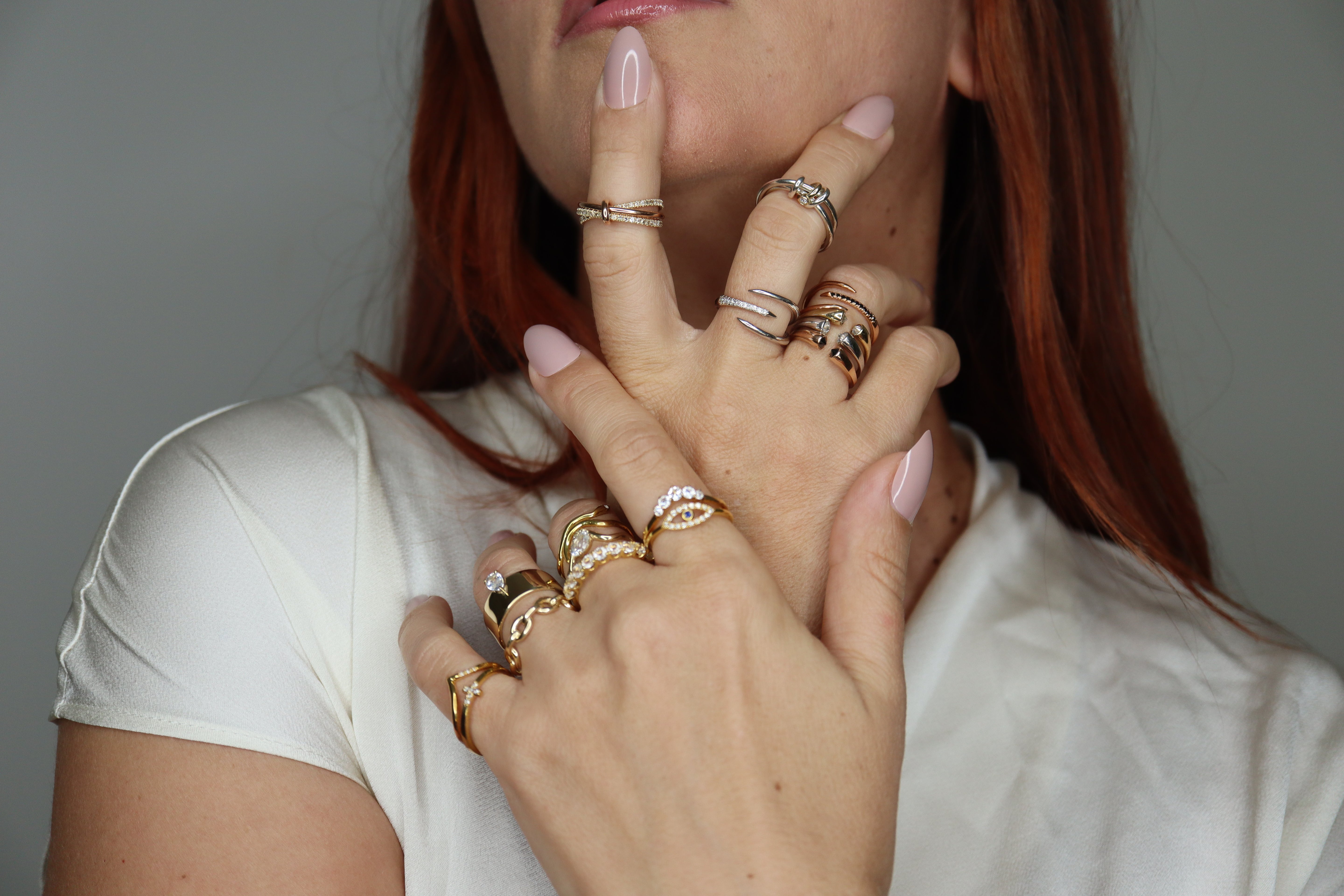





Can a 14k Gold Ring Be Resized? Cost & Limits
Yes, most solid 14k gold rings can be resized by a qualified jeweler. A simple 14k gold band can usually be resized one to two sizes up or down, but the exact limit depends on the ring’s width, thickness, gemstone setting, engraving, and design complexity.
For solid 14k gold rings, resizing is usually possible because 14k gold is workable, durable, and easier to repair than many alternative jewelry materials. More complex designs, including kinetic rings, pavé bands, eternity bands, and rings with stones set around the band, may need special handling or may be better remade in the correct size.
If you are buying a made-to-order ring, it is always better to get the size right before the piece is created. Resizing can solve many fit issues, but the safest option for detailed or moving designs is accurate sizing from the start.
14k Gold Ring Resizing at a Glance
Most simple solid 14k gold rings can be resized, but the safest approach depends on the ring’s design. Plain bands are usually the easiest to adjust, while rings with stones, engraving, moving parts, or full-band details require more care.
| Question | Short answer |
|---|---|
| Can a 14k gold ring be resized? | Yes, most simple solid 14k gold rings can be resized by a qualified jeweler. |
| How many sizes can it change? | Usually one to two sizes up or down, depending on the design. |
| Can it be made bigger? | Yes, either by slight stretching or by adding matching 14k gold to the band. |
| Can it be made smaller? | Yes, by removing a small section of metal and soldering the band closed. |
| Are all gold ring designs easy to resize? | No. Eternity bands, pavé bands, engraved rings, tension settings, and kinetic rings are more difficult. |
| How much does resizing usually cost? | Simple resizing often costs about $30 to $100. Complex work can cost $100 to $300 or more. |
If the ring is simple and solid, resizing is usually straightforward. If the ring has movement, stones around the band, or detailed surface work, it should be evaluated before any changes are made.
How Does a Jeweler Resize a 14k Gold Ring?
A jeweler resizes a 14k gold ring by changing the circumference of the band, then restoring the shape, strength, and finish of the ring. The exact process depends on whether the ring needs to be made bigger or smaller.
Making a gold ring bigger
To make a 14k gold ring bigger, a jeweler may stretch the band slightly for a very small adjustment, usually around a quarter size or half size. For a larger size increase, the better method is to cut the band at the bottom, add a small piece of matching 14k gold, solder the new section into place, then reshape and polish the ring.
Adding gold is usually safer than stretching when the ring needs to go up by more than a small amount. Stretching can thin the metal and may distort the shape of the band if pushed too far.
Making a gold ring smaller
To make a 14k gold ring smaller, a jeweler cuts out a small section of metal from the bottom of the band. The ends are then brought together, soldered closed, reshaped into a circle, and polished so the resize area blends into the rest of the ring.
Finishing the resized area
After the ring is soldered, the jeweler files, smooths, and polishes the resized area. On a simple solid gold band, a professional resize should be difficult to see. Rings with stones, engraving, texture, or moving parts may need extra work because the jeweler has to protect those design details while adjusting the band.
How Many Sizes Can a 14k Gold Ring Be Resized?
Most simple 14k gold rings can be resized about one to two sizes up or down. A smaller change, such as a quarter size or half size, is usually straightforward for a plain solid gold band. Larger changes require more care because they can affect the ring’s shape, structure, stone settings, or design details.
| Size change | Risk level | Best option |
|---|---|---|
| Quarter to half size | Low | Often simple for plain solid 14k gold bands |
| One size | Low to moderate | Usually safe for simple 14k gold rings |
| Two sizes | Moderate | Possible, but ring design and thickness matter |
| More than two sizes | Higher | Often better to remake the ring in the correct size |
For a plain band, a jeweler may be able to resize beyond two sizes, but that does not mean it is always the best choice. The more the ring changes, the more likely it is that the proportions, comfort, or durability will be affected.
For rings with pavé stones, eternity settings, engraving, wide bands, or moving components, the safe resizing range may be much smaller. In those cases, it is better to have the ring evaluated before deciding whether to resize it or remake it.
Can a 14k Gold Ring Be Made Bigger?
Yes, a 14k gold ring can often be made bigger. For a very small adjustment, such as a quarter size or half size, a jeweler may be able to stretch the band slightly. For a larger increase, the safer method is usually to cut the band and add a small piece of matching 14k gold.
When gold is added, the jeweler opens the band at the bottom, inserts new metal, solders the joints, reshapes the ring, and polishes the area so the added section blends into the original band. On a simple solid gold ring, this can create a clean and durable result.
Not every ring should be stretched. Stretching can thin the metal, distort the band, or loosen stones if the ring has pavé, channel settings, engraving, or moving parts. For complex designs, adding gold or remaking the ring in the correct size is often safer than forcing the existing band larger.
Do not try to stretch a gold ring at home. Too much pressure can bend the band unevenly, damage the setting, crack solder joints, or make the ring harder for a jeweler to repair later.
Can a 14k Gold Ring Be Made Smaller?
Yes, a 14k gold ring can usually be made smaller. To size a ring down, a jeweler removes a small section from the bottom of the band, brings the two ends together, solders the joint, reshapes the ring, and polishes the resized area so it blends with the rest of the band.
Making a ring smaller is often simpler than making it larger because the jeweler does not need to add new gold. The main concern is preserving the ring’s shape, thickness, stone settings, engraving, and any design details around the band.
When a ring is sized down, a small amount of gold is removed. Some jewelers keep the removed metal, while others may return it or apply a credit depending on their shop policy. If this matters to you, ask before the resizing work begins.
For plain solid 14k gold bands, sizing down is usually straightforward. For eternity bands, pavé rings, engraved bands, and kinetic designs, reducing the size can be more complicated because the entire structure of the ring may be affected.
Which Gold Ring Designs Are Hard to Resize?
Some gold rings are much easier to resize than others. A plain solid 14k gold band is usually the simplest because the jeweler can work on the bottom of the band without disturbing stones, moving parts, or surface details. More complex designs need a closer evaluation before resizing.
| Ring design | Resize difficulty | Why it is harder |
|---|---|---|
| Plain 14k gold band | Usually easy | No stones, engraving, or moving parts to disrupt |
| Wide gold band | Moderate | Shape and fit changes are more noticeable on a wider surface |
| Eternity band | Difficult | Stones continue around the full band, leaving little plain metal to adjust |
| Pavé band | Difficult | Small stones can loosen if the band is stretched, compressed, or heated |
| Kinetic ring | Difficult | Moving components depend on precise spacing and balance |
| Engraved ring | Moderate to difficult | Resizing can interrupt the pattern, lettering, or surface detail |
Gold eternity bands are often difficult to resize because the gemstone pattern wraps around the ring. Sizing down may require removing stones, while sizing up may require adding stones that match the original setting.
Gold kinetic rings are also more complex because their movement depends on exact spacing between the band, links, and moving elements. Changing the ring size can affect how smoothly the components move.
Wide gold band rings can often be resized, but the work needs to be precise because any change in shape or proportion is easier to notice on a wider band. If a ring has stones, texture, engraving, or moving parts, ask a qualified jeweler or the original maker before resizing.
Can Gold Plated, Vermeil, or Gold-Filled Rings Be Resized?
Gold plated, gold vermeil, and gold-filled rings are much harder to resize than solid 14k gold rings. Resizing usually involves cutting, heating, soldering, shaping, and polishing the band, and those steps can damage or remove the outer gold layer.
A gold plated ring has only a thin layer of gold over a base metal. If the ring is resized, the plating can burn, flake, discolor, or wear away around the resized area. Gold vermeil has a thicker gold layer over sterling silver, but it can still be damaged by heat and polishing. Gold-filled rings contain more gold than plated pieces, but they are still layered rather than solid throughout.
This is why solid gold is usually the better choice if long-term repairability matters. A solid 14k gold ring can be cut, soldered, reshaped, and polished because the gold alloy runs through the entire band rather than existing only on the surface.
If you are comparing materials before buying, read more about solid gold, plated, vermeil, and gold-filled jewelry before choosing a ring you may need to resize later.
How Much Does It Cost to Resize a 14k Gold Ring?
The cost to resize a 14k gold ring depends on the direction of the size change, how much the ring needs to change, the width of the band, whether stones are involved, and whether extra gold must be added. A simple resize is usually affordable, while complex designs require more labor and care.
| Resize type | Typical cost range | Why the cost varies |
|---|---|---|
| Simple size down | $30 to $100 | Less labor and no added gold |
| Simple size up | $50 to $150 | May require added 14k gold |
| Wide band resizing | $100 to $250+ | More shaping, soldering, and finishing work |
| Gemstone, pavé, or eternity band work | $150 to $300+ | Stone security and pattern matching add complexity |
| Kinetic or custom ring adjustment | Varies | The original maker may need to evaluate the design |
These are general estimates, and actual pricing can vary by jeweler, location, gold price, ring construction, and repair complexity.
Sizing up often costs more than sizing down because the jeweler may need to add matching gold to the band. The current gold price, the ring’s karat, and the amount of added metal can all affect the final quote.
Before approving the work, ask the jeweler whether the quote includes added gold, soldering, stone tightening, polishing, rhodium plating for white gold, and any follow-up adjustments. For complex or made-to-order rings, contact the original designer before taking the ring to a local repair shop.
Does Resizing Weaken a 14k Gold Ring?
A professional resize should not meaningfully weaken a simple solid 14k gold ring when the work is done correctly. A qualified jeweler will cut, solder, reshape, and polish the band so the resized area becomes part of the ring’s continuous structure.
The risk increases when a ring is resized by several sizes, resized many times, or altered near gemstones, engraving, moving parts, or thin areas of metal. Each resize adds stress to the band, and repeated work can make the ring more vulnerable over time.
One careful resize is usually fine for a plain solid gold ring. Repeated resizing is where risk begins to build. If your finger size changes often, or if the ring has already been resized more than once, ask the jeweler whether another resize is still the best option.
For kinetic rings, pavé bands, eternity bands, and other detailed designs, the concern is not only the solder joint. The resize can also affect stone security, movement, symmetry, or the way the ring sits on the finger. In those cases, the original maker should evaluate the ring before any work begins.
What About Antoanetta’s Made-to-Order Rings?
Antoanetta rings are made individually in the size selected at the time of order. That matters because the proportions, comfort, movement, and structural balance of the ring are built around that chosen size from the beginning.
For a simple solid gold band, resizing after purchase may be possible. For more detailed Antoanetta designs, especially kinetic rings, pavé bands, eternity bands, and wide sculptural rings, resizing can affect the way the piece looks, fits, or moves. In those cases, it may be better to make the ring again in the correct size rather than alter the original piece.
If your Antoanetta ring does not fit as expected, contact the designer before taking it to a local repair shop. The original maker can evaluate the design, explain the safest options, and help determine whether resizing, adjustment, or remaking is the better choice.
The best approach is to confirm your size before the ring is made. Use the ring size chart and how to measure ring size at home before ordering, especially for wide bands, eternity designs, and kinetic rings.
How to Avoid Resizing a Ring After You Buy It
The best way to avoid resizing is to measure carefully before ordering, especially if you are choosing a wide band, eternity band, pavé ring, or kinetic design. These styles are harder to alter after they are made, so accurate sizing matters from the beginning.
- Measure the exact finger: Ring size can vary between hands and between fingers.
- Measure later in the day: Fingers are often slightly larger in the afternoon or evening.
- Avoid measuring cold fingers: Cold temperatures can make fingers temporarily smaller.
- Consider band width: Wider rings can feel snugger than narrow bands, so they may need a slightly different fit.
- Use a physical ring sizer when possible: Printable charts are useful, but a real sizer is more accurate.
- Check the brand’s sizing notes: Made-to-order and kinetic rings may have specific fit recommendations.
If you are unsure, start with the ring size chart and how to measure ring size at home. A few minutes of careful measuring can save time, cost, and risk after the ring is made.
Frequently Asked Questions About 14k Gold Ring Resizing
Can a 14k gold ring be resized?
Yes. Most simple solid 14k gold rings can be resized by a qualified jeweler, usually by one to two sizes up or down. Rings with stones, engraving, moving parts, or full-band details need a closer evaluation first.
Can you make a 14k gold ring bigger?
Yes. A jeweler can often make a 14k gold ring bigger by stretching it slightly for a small adjustment or by cutting the band and adding matching 14k gold for a larger size increase.
Can you make a 14k gold ring smaller?
Yes. A jeweler can make a 14k gold ring smaller by removing a small section from the band, soldering the ends together, reshaping the ring, and polishing the resized area.
How much does it cost to resize a 14k gold ring?
Simple 14k gold ring resizing often costs about $30 to $100. More complex work involving wider bands, gemstones, added gold, or custom construction can cost $100 to $300 or more.
How many sizes can a 14k gold ring be resized?
Most simple 14k gold rings can be resized one to two sizes. Larger changes may be possible, but they carry more risk and may affect the ring’s shape, structure, or design details.
Can a white gold ring be resized?
Yes. White gold can usually be resized like yellow or rose gold, but it may need new rhodium plating after the resizing work is finished because heat and polishing can affect the bright white surface.
Can a gold plated ring be resized?
Gold plated rings are difficult to resize because cutting, soldering, heating, and polishing can damage or remove the plated surface. Solid gold is usually a better choice if long-term resizing or repair matters.
Does resizing weaken a gold ring?
A proper resize should not meaningfully weaken a simple solid gold ring. Risk increases with repeated resizing, large size changes, thin bands, gemstones, engraving, and complex designs.
Can eternity bands be resized?
Eternity bands are difficult to resize because gemstones continue around the entire band. Resizing can interrupt the stone pattern, loosen stones, or require matching replacement stones.
Should kinetic rings be resized?
Kinetic rings are harder to resize because their moving parts depend on precise spacing and balance. It is usually better to order the correct size from the beginning or contact the original maker for options.
Choose the Right Size Before Your Ring Is Made
For a simple solid gold band, resizing is often possible. For kinetic rings, eternity bands, pavé designs, wide bands, and made-to-order pieces, the better choice is to get the size right before the ring is created.
Explore Antoanetta’s 14k gold rings, gold kinetic rings, and 14k gold wedding bands, then use the ring size chart before ordering.