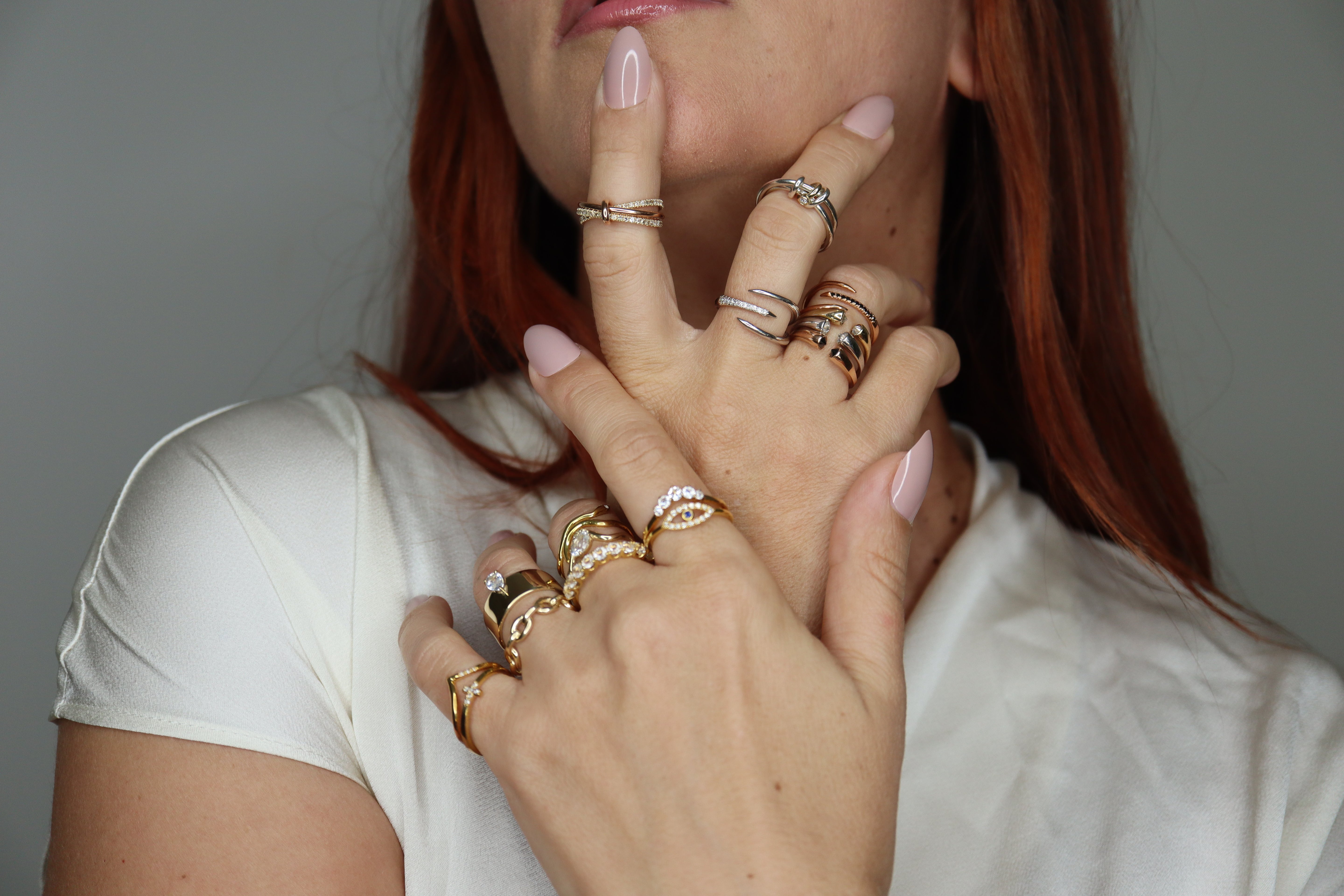





Does 14K Gold Tarnish or Turn Skin Green?
No, solid 14k gold does not tarnish, rust, fade, or turn your finger green under normal daily wear. Real 14k gold is a durable gold alloy made for everyday jewelry. If a ring turns skin green, loses its gold color, or develops dark surface discoloration, the cause is usually plating wear, base metal exposure, product residue, or a material that is not solid gold.
Solid 14k gold behaves differently from gold-plated, gold-filled, vermeil, brass, or copper jewelry because the gold is part of the metal itself, not just a thin surface layer. That is why solid 14k gold rings are a practical choice for jewelry you want to wear every day.
You will learn why 14k gold resists tarnish, why some rings turn skin green, what happens when 14k gold gets wet, and how to keep solid gold jewelry clean without damaging it.
Quick Answers About 14K Gold Tarnish, Fading, Rust, and Green Skin
Here are the short answers to the most common questions about how solid 14k gold behaves during everyday wear.
| Question | Short answer | What it means |
|---|---|---|
| Does 14k gold tarnish? | No, solid 14k gold does not normally tarnish. | Surface dullness is usually residue from soap, lotion, sweat, or oils, not true tarnish. |
| Does 14k gold turn skin green? | No, solid 14k gold should not turn skin green. | Green marks usually come from exposed copper, brass, or failed plating. |
| Does 14k gold fade? | No, solid yellow and rose 14k gold do not fade. | The color is part of the gold alloy, not a coating that wears away. |
| Does 14k gold rust? | No, gold does not rust. | Rust is an iron reaction, and gold does not contain iron. |
| Can 14k gold get wet? | Yes, solid 14k gold can get wet. | Water does not damage solid 14k gold, though soap, minerals, chlorine, salt, or sunscreen can leave temporary residue. |
If a piece of jewelry tarnishes, fades, rusts, or leaves green marks on your skin, it is worth checking whether it is truly solid 14k gold or whether it is gold plated, gold filled, vermeil, brass, copper, or another base-metal construction.
Why Solid 14K Gold Does Not Tarnish Like Plated Jewelry
Tarnish is a surface reaction. It happens when a metal reacts with oxygen, sulfur, moisture, or other compounds in the environment. Silver can darken from sulfur exposure, and copper can oxidize into a greenish residue. Gold behaves differently because it is a noble metal, meaning it resists the chemical reactions that cause most visible tarnish.
Solid 14k gold is an alloy made from real gold combined with stronger metals for durability. Because the gold is part of the metal itself, not just a surface coating, the ring does not lose its gold color the way plated jewelry can. Daily exposure to air, water, sweat, and soap may leave residue on the surface, but that is not the same as tarnish.
Gold-plated jewelry is different. A plated piece has a thin layer of gold over another metal, often brass, copper, or another base metal. As that thin gold layer wears down, the base metal underneath can react with skin, moisture, and chemicals. That is when jewelry may darken, fade, or leave green marks on your finger.
This is the main difference between solid 14k gold and plated jewelry: solid gold can be cleaned and polished because the gold runs throughout the piece, while plated jewelry depends on a surface layer that can wear away over time.
Does 14K Gold Turn Your Finger Green?
Solid 14k gold should not turn your finger green. Green marks usually happen when copper, brass, or another base metal reacts with sweat, moisture, lotion, or skin chemistry. This is common with plated jewelry after the gold layer wears down, but it is not normal for solid 14k gold.
In 14k gold, copper and other alloy metals are mixed into the gold itself. They are not exposed as a separate base layer against your skin. That is why a solid 14k gold ring behaves differently from a gold-plated ring over brass or copper.
If a ring leaves a green mark, the most likely causes are worn plating, exposed base metal, product residue trapped under the ring, or a piece that was mislabeled as solid gold. The green mark is usually not dangerous, but it is a sign that the jewelry may not be solid 14k gold.
If you are wearing a verified solid 14k gold ring and notice temporary discoloration, wash the area with soap and water and clean the ring gently. Lotions, cleaning products, sunscreen, or minerals can sometimes leave residue on the skin, but the gold itself should remain unchanged.
Does 14K Gold Fade, Rust, or Change Color?
Solid 14k gold does not fade or rust under normal wear. If a 14k gold ring looks dull, darker, or less bright than usual, the cause is usually surface buildup from soap, lotion, sweat, sunscreen, oils, or tiny scratches from everyday use.
Does 14k gold fade?
Solid yellow and rose 14k gold do not fade because their color comes from the alloy itself. The gold color is not painted on or added as a surface coating. If a piece loses its gold color, it is likely plated, gold-filled, vermeil, or another layered material rather than solid 14k gold.
Does 14k gold rust?
No, solid 14k gold does not rust. Rust is a reaction that happens when iron oxidizes, and standard 14k gold jewelry is not made with iron. Solid 14k gold can look dull from residue or wear, but that is not the same as rust.
Does 14k gold change color over time?
Solid 14k gold should keep its gold color over time. Daily wear can create a softer surface sheen, small scratches, or temporary dullness from buildup, but the metal itself does not lose its gold character. Cleaning with warm water and mild soap usually restores brightness.
Can 14K Gold Get Wet?
Yes, solid 14k gold can get wet. Water does not make solid 14k gold tarnish, rust, fade, or turn green. You can wash your hands, shower, and wear solid 14k gold during normal water exposure without damaging the gold itself.
Can you shower with 14k gold?
You can shower with solid 14k gold. Tap water and mild soap will not damage the gold, but soap residue can build up over time and make the ring look less bright. A gentle cleaning with warm water and mild dish soap will restore the shine.
Can you swim with 14k gold?
Solid 14k gold can handle normal pool and ocean exposure, but chlorine, salt, sunscreen, and minerals can leave residue on the surface or around gemstone settings. Rinsing and drying your ring after swimming helps keep it looking clean.
Does salt water damage 14k gold?
Salt water does not damage solid 14k gold. The gold itself will not corrode or tarnish from ocean water. The main concern is buildup from salt, sand, sunscreen, or debris around stones, settings, or moving parts.
If your ring has gemstones, pavé settings, or kinetic components, water exposure may require a little extra cleaning around small spaces. For everyday wear, solid 14k gold remains one of the most practical choices because the metal is durable, stable, and easy to clean.
Does Sweat, Lotion, Perfume, or Sunscreen Affect 14K Gold?
Sweat does not tarnish solid 14k gold. Sweat contains moisture, salts, and mild acids, but normal perspiration will not make solid 14k gold rust, fade, or turn green. If your ring looks dull after exercise or summer wear, the cause is usually surface residue rather than damage to the gold.
Lotion, perfume, sunscreen, soap, and hand sanitizer can also leave buildup on the surface of the ring. This residue may make gold look cloudy or less bright, especially around gemstones, pavé settings, engraving, or moving components. The good news is that this is not tarnish. It can usually be cleaned away with warm water, mild dish soap, and a soft brush.
Kinetic designs may need a little extra care because residue can collect between moving links or interlocking bands. If you wear gold kinetic rings every day, a gentle rinse and occasional soft-brush cleaning can help keep the movement smooth and the gold looking bright.
For daily wear, you do not need to remove solid 14k gold every time you wash your hands, apply lotion, or go outside with sunscreen. Just clean the ring when buildup starts to dull the surface.
Does Yellow, White, or Rose 14K Gold Age Differently?
Yellow, white, and rose 14k gold are all solid gold alloys, but they do not age in exactly the same way. The difference comes from alloy composition and, in the case of white gold, surface finishing.
Does 14k yellow gold tarnish?
Solid 14k yellow gold does not normally tarnish, fade, or turn green. Its warm gold color comes from the alloy itself, not from a coating. Daily wear may create small surface scratches or temporary dullness from residue, but the yellow gold color should remain stable over time.
Does 14k white gold tarnish?
14k white gold does not tarnish like silver, but many white gold rings are finished with rhodium plating to create a brighter white surface. Over time, that rhodium layer can wear down and reveal the slightly warmer white gold alloy underneath. This is normal wear, not tarnish. A jeweler can restore the bright white finish through rhodium re-plating.
Does 14k rose gold tarnish?
Solid 14k rose gold does not normally tarnish or turn skin green. Its pink tone comes from copper blended into the gold alloy, not from exposed copper on the surface. Because the copper is part of the solid alloy, rose gold behaves differently from copper or brass jewelry that can leave green marks on the skin.
If you are choosing by color, compare how white gold rings and rose gold rings age in real wear. Both can be durable choices, but white gold may need occasional rhodium maintenance, while rose gold keeps its warm color without a surface coating.
Solid 14K Gold vs Plated, Filled, and Vermeil Jewelry
Many tarnish and green-skin concerns come from confusion between solid gold and gold-layered jewelry. These materials can look similar when new, but they behave very differently with daily wear.
| Jewelry type | Can it tarnish or turn green? | Why it happens |
|---|---|---|
| Solid 14k gold | Not under normal wear | The gold is part of the metal alloy, not a surface coating. |
| Gold plated | Yes, especially after wear | The thin gold layer can wear away and expose brass, copper, or another base metal. |
| Gold filled | It can discolor over time | The outer gold layer is thicker than plating, but it is still bonded over another metal. |
| Gold vermeil | It can wear or discolor | Vermeil is gold over sterling silver, so the surface can change with friction, moisture, and daily use. |
The key difference is structure. Solid 14k gold is gold throughout the piece, while plated, filled, and vermeil jewelry rely on a gold layer over another material. Once that layer wears down, the jewelry underneath may react with moisture, sweat, or skin chemistry.
That does not mean every layered piece will turn green immediately, but it does mean it will not age the same way as solid gold. For a closer comparison, read more about solid gold vs plated, filled, and vermeil jewelry.
How to Clean 14K Gold at Home
Solid 14k gold does not need special tarnish-removal products. Most dullness comes from everyday buildup, such as soap, lotion, sunscreen, skin oils, and dust. A simple cleaning routine is usually enough to restore brightness.
To clean a 14k gold ring at home, soak it in warm water with a small amount of mild dish soap for 10 to 15 minutes. Use a very soft toothbrush to gently clean around gemstones, pavé settings, engraving, and small details. Rinse the ring under warm running water, then pat it dry with a soft, lint-free cloth.
For kinetic rings, pay extra attention to the spaces between moving links, rolling bands, or interlocking components. Residue can collect in those small areas, so a warm water soak and gentle brushing can help keep the movement clean and smooth.
- Do not use bleach or harsh household cleaners.
- Do not use toothpaste, which can be too abrasive.
- Do not use rough cloths or paper towels that may scratch the surface.
- Do not use abrasive polishing compounds for routine cleaning.
- Do not use an ultrasonic cleaner for kinetic rings unless the specific design is confirmed compatible.
If your ring still looks dull after cleaning, the issue may be tiny surface scratches rather than residue. A jeweler can polish solid 14k gold when needed, because the gold is part of the ring itself rather than a thin surface layer.
Frequently Asked Questions About 14K Gold Tarnishing
Does 14k gold tarnish?
No, solid 14k gold does not normally tarnish under daily wear. If it looks dull, the cause is usually surface residue from soap, lotion, sweat, sunscreen, or skin oils rather than true tarnish.
Will 14k gold turn my finger green?
Solid 14k gold should not turn your finger green. Green marks usually come from copper, brass, or another base metal, especially when the gold layer on plated jewelry wears down and exposes the metal underneath.
Does 14k gold rust?
No, solid 14k gold does not rust. Rust is an iron reaction, and standard 14k gold jewelry is not made with iron. If a piece of jewelry shows rust-like discoloration, it is probably not solid 14k gold.
Does 14k gold fade?
Solid yellow and rose 14k gold do not fade because their color comes from the alloy itself. White gold may need rhodium re-plating over time, but that is normal surface wear, not tarnish.
Can you shower with 14k gold?
Yes, solid 14k gold can get wet. Shower water will not damage the gold, but soap and minerals can leave residue over time. Occasional cleaning helps keep the ring bright.
Can you swim with 14k gold?
Solid 14k gold can handle normal pool and ocean exposure, but chlorine, salt, sunscreen, and minerals can leave buildup on the surface or around settings. Rinse and dry the ring after swimming when possible.
Does 14k white gold tarnish?
14k white gold does not tarnish like silver, but many white gold rings have a rhodium finish that can wear down with friction. When that happens, the ring may look slightly warmer until a jeweler re-plates it.
Does 14k rose gold tarnish?
Solid 14k rose gold does not normally tarnish or turn skin green. Its pink color comes from copper blended into the gold alloy, not exposed copper sitting on the surface.
Why does my 14k gold ring look dull?
A dull look is usually caused by residue, oils, lotion, soap, sunscreen, or tiny surface scratches from wear. Cleaning with warm water, mild dish soap, and a soft brush often restores the shine.
Is 14k gold good for everyday wear?
Yes, 14k gold is a strong choice for everyday rings because it balances real gold content with alloy metals that improve durability. It is more durable than higher-karat gold and lasts much longer than plated alternatives.
Choosing 14K Gold for Everyday Wear
If you want jewelry that can handle daily wear without tarnishing, fading, rusting, or turning your skin green, solid 14k gold is one of the most practical choices. It gives you real gold color and lasting material value, with better durability than higher-karat gold and far more longevity than plated alternatives.
The key is choosing solid gold, not a thin gold layer over another metal. Solid 14k gold can be cleaned, polished, and worn for years because the gold is part of the alloy itself. Plated, filled, and vermeil jewelry may look similar when new, but the surface layer can wear down over time.
Explore Antoanetta’s 14k gold rings, gold kinetic rings, and gold stacking rings for solid gold designs made for everyday wear.